
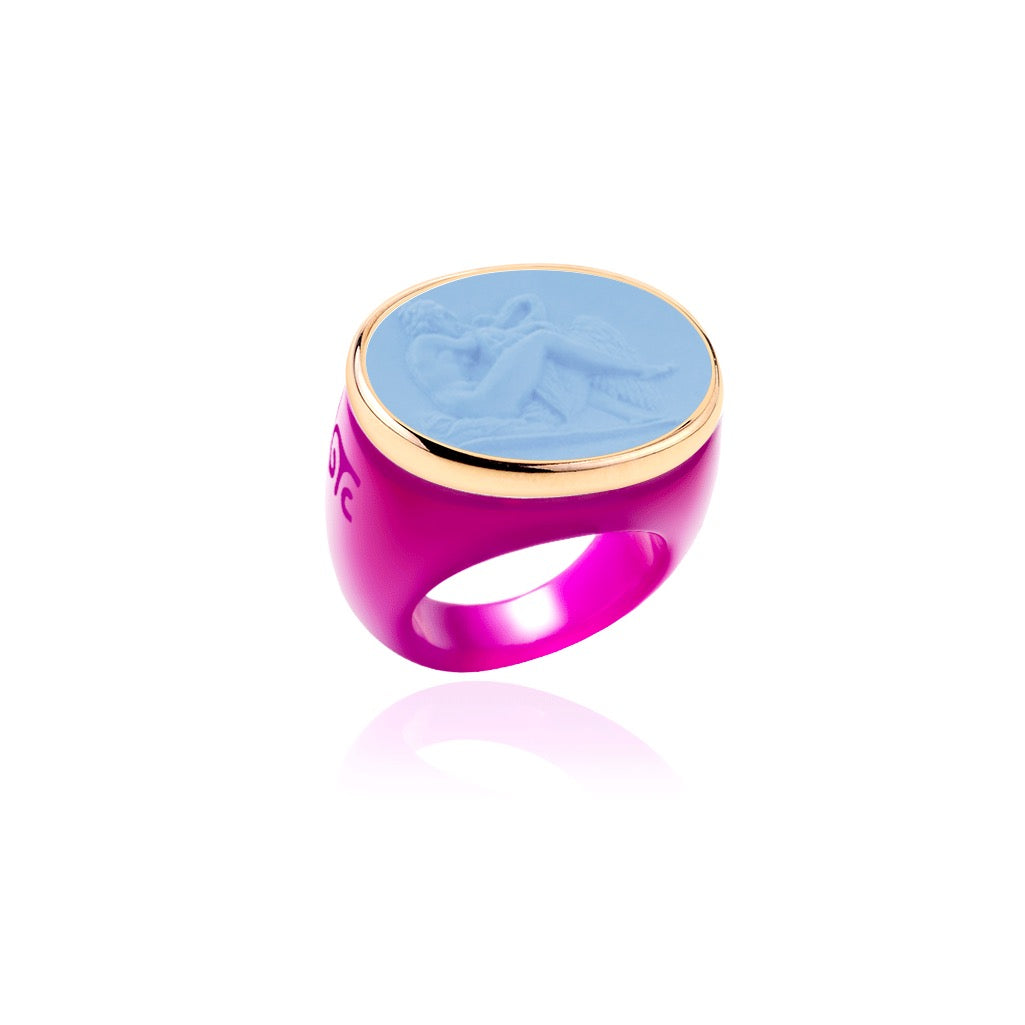
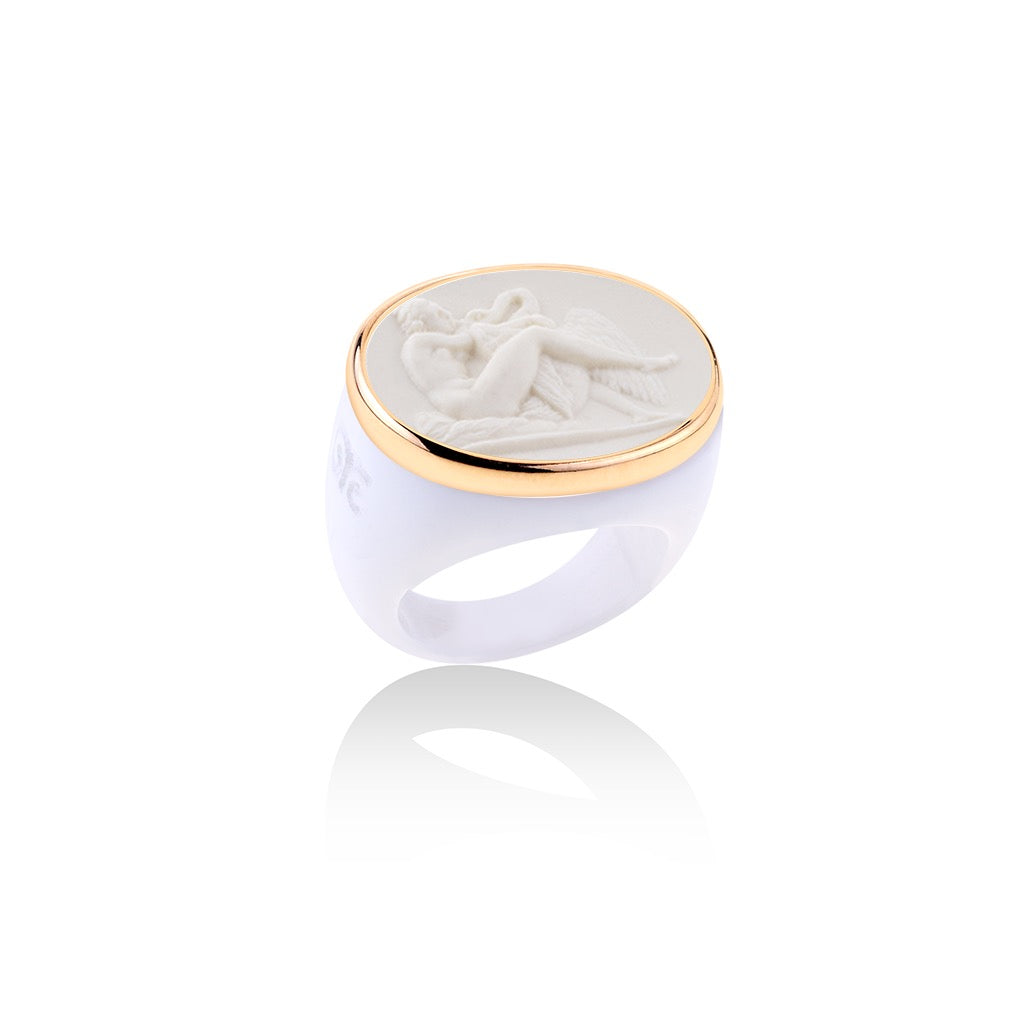

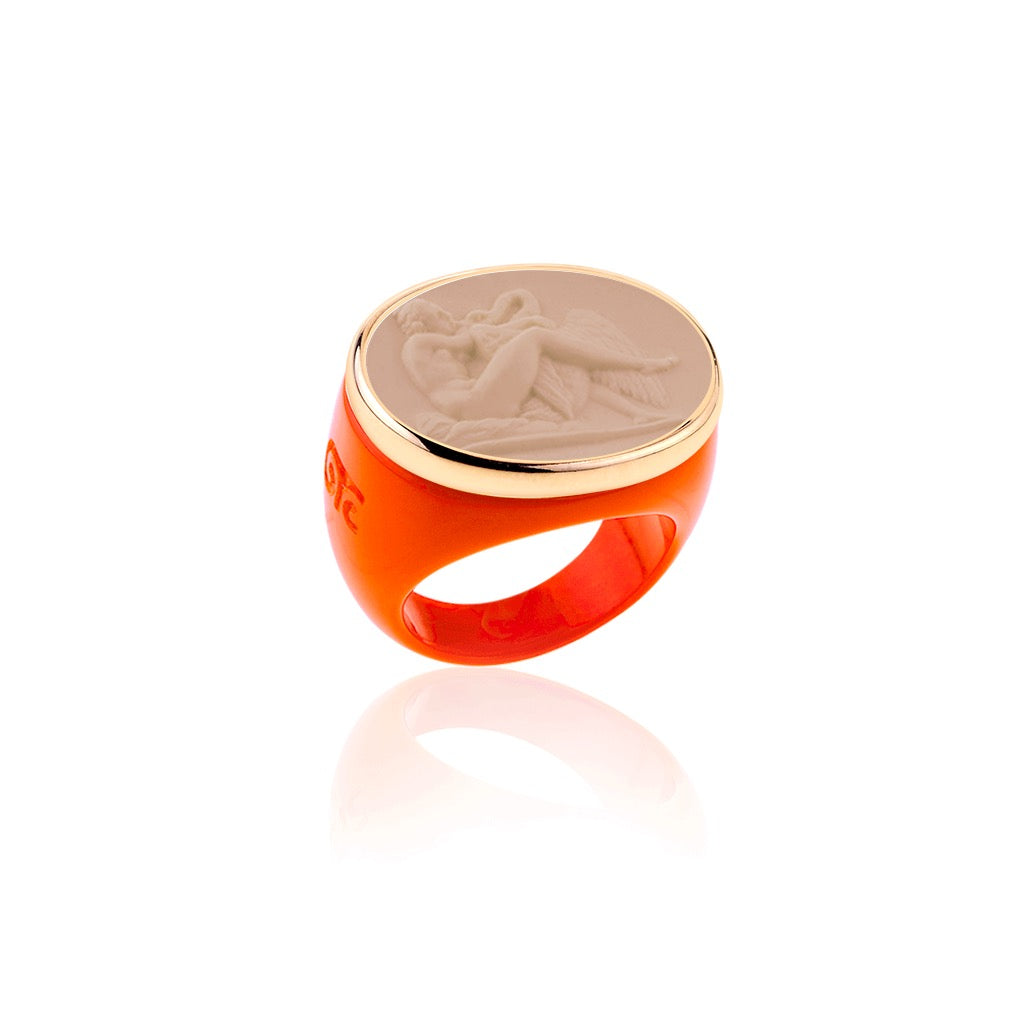
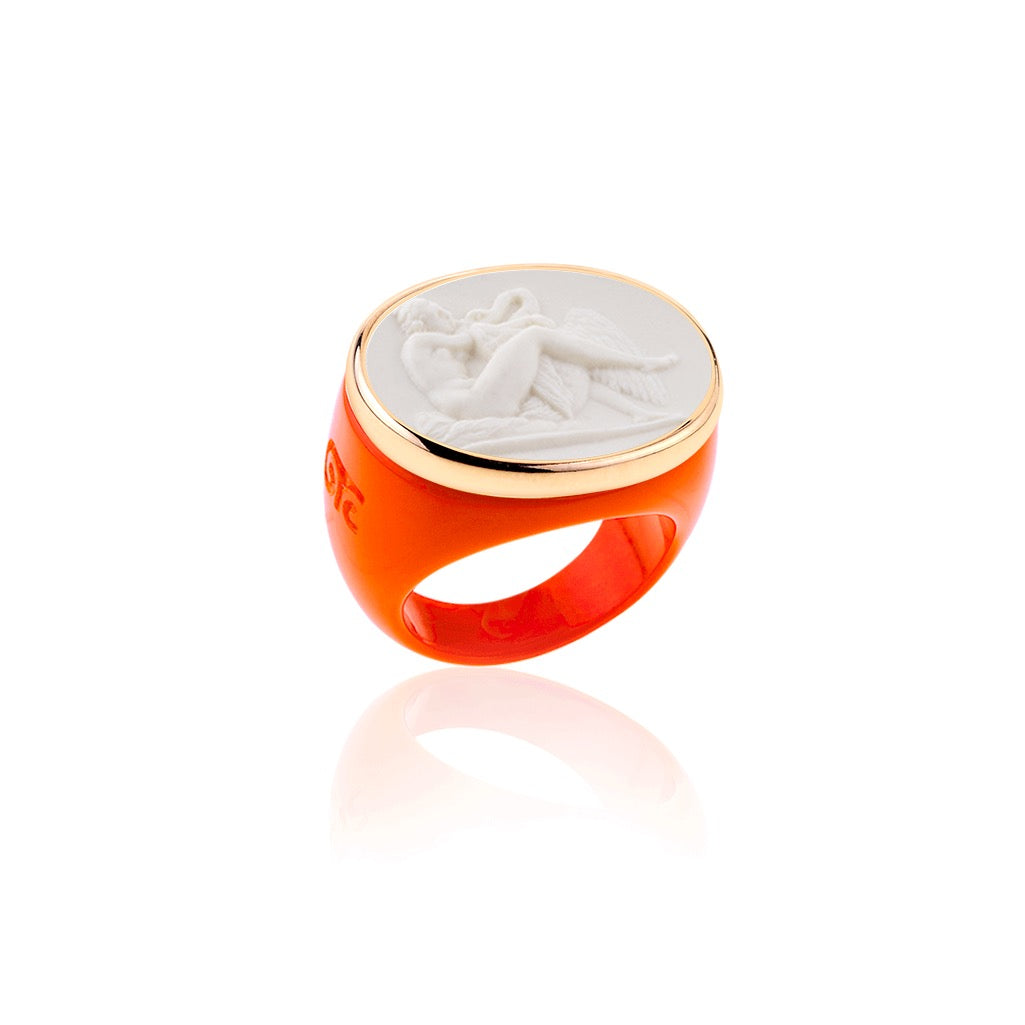
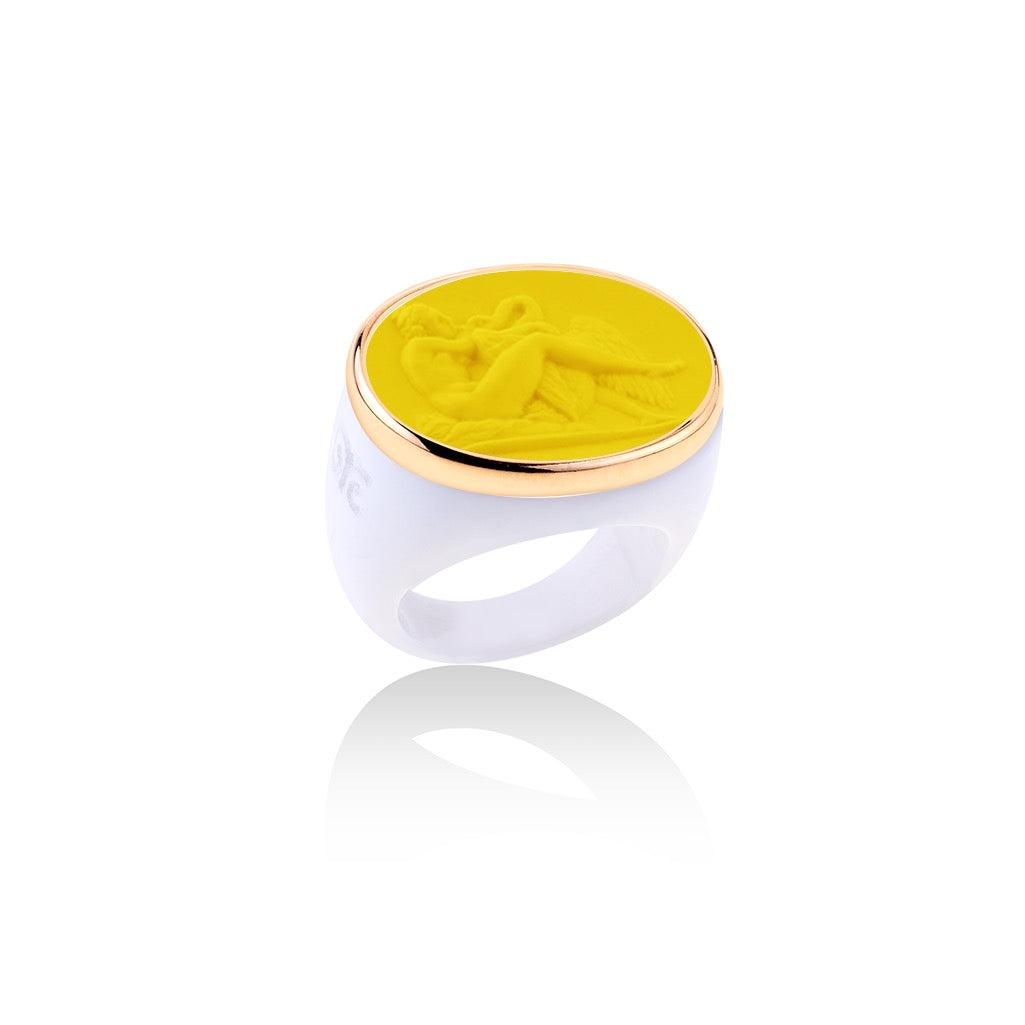
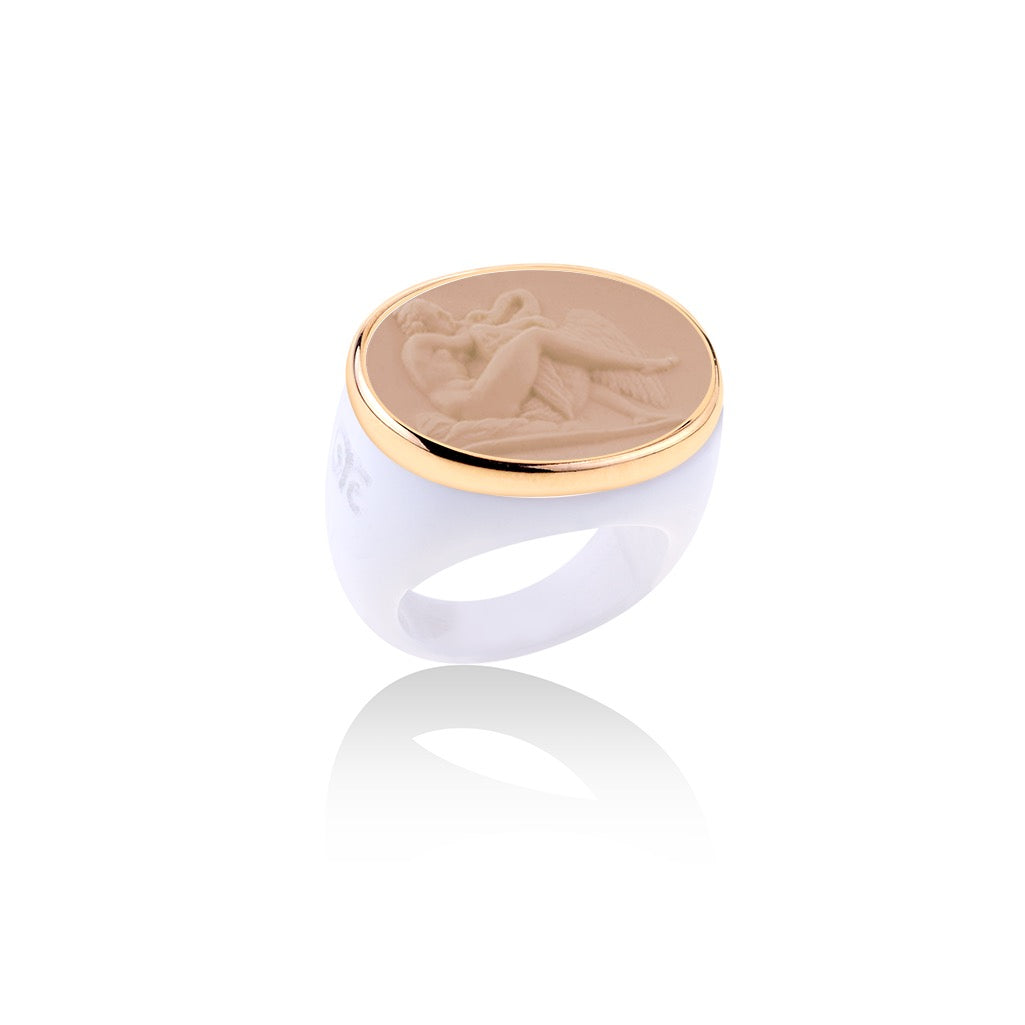
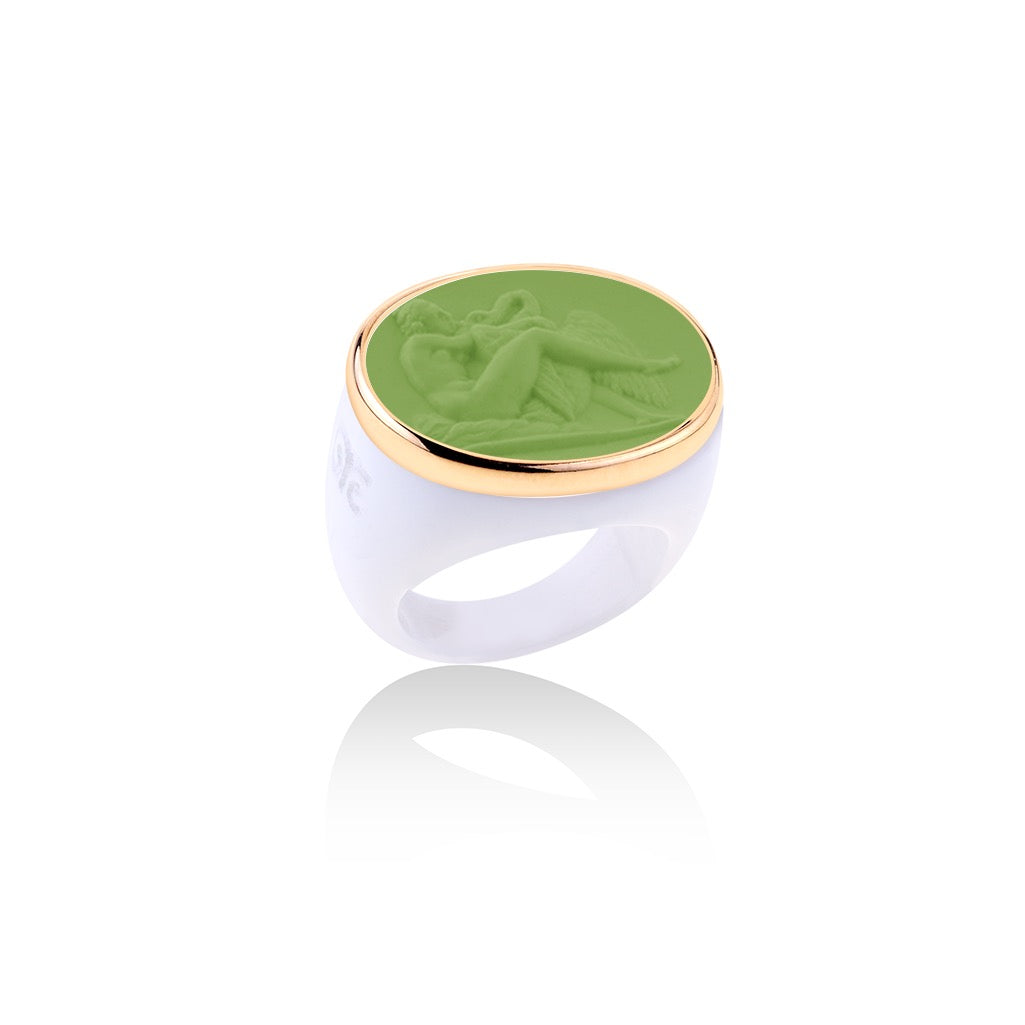
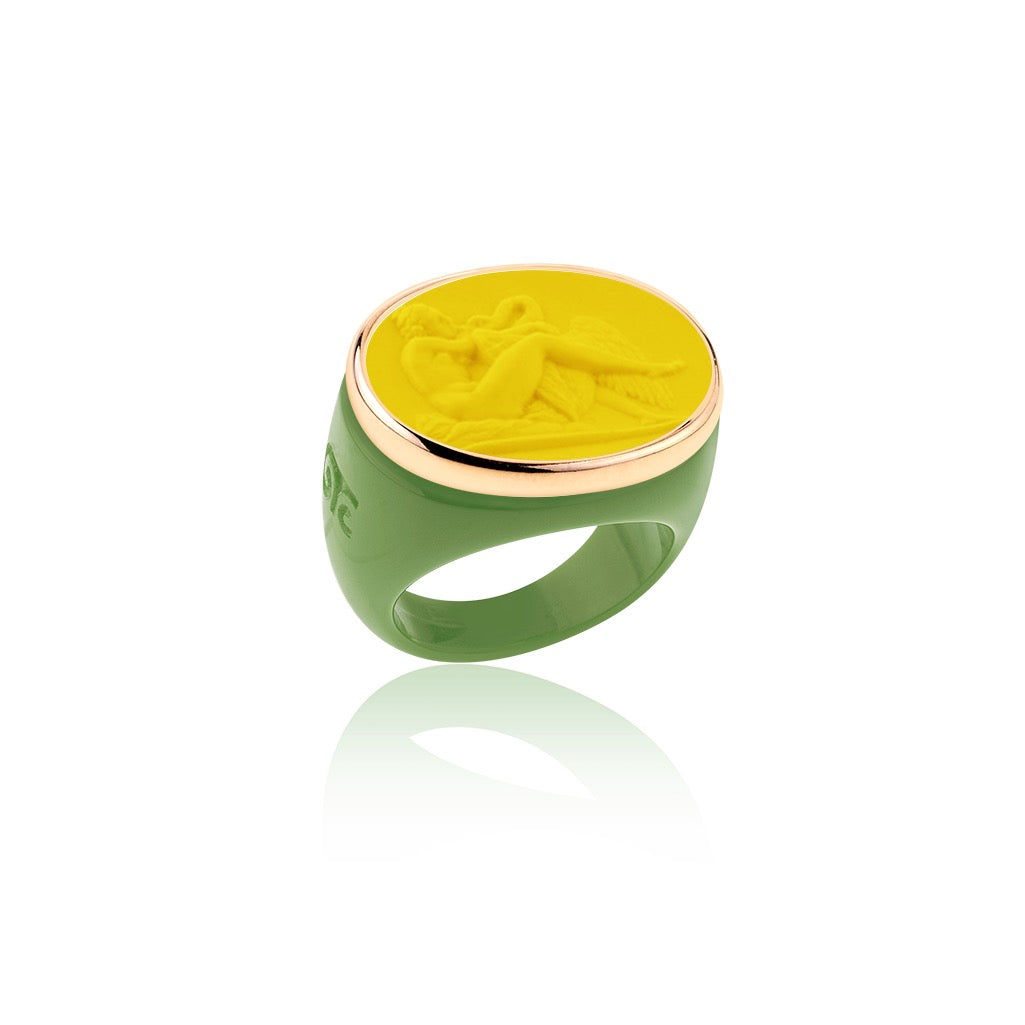
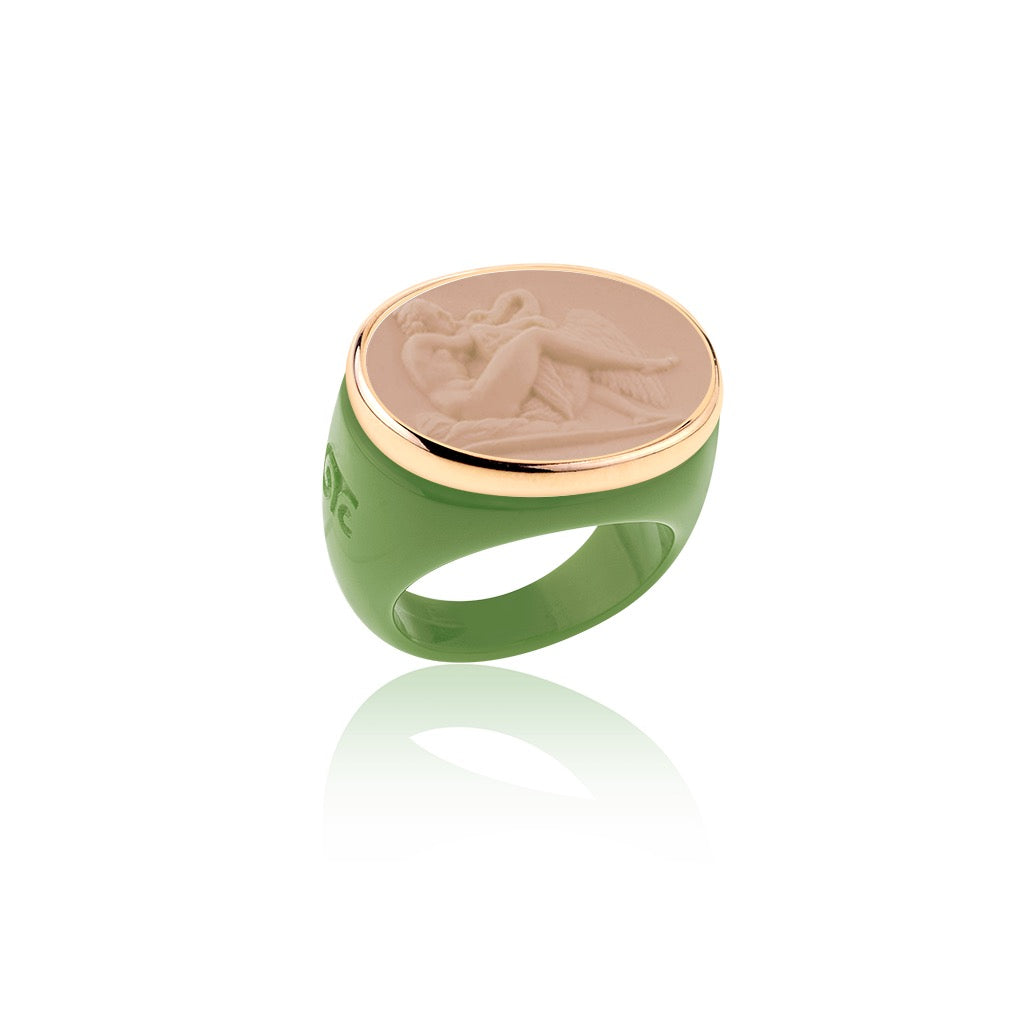
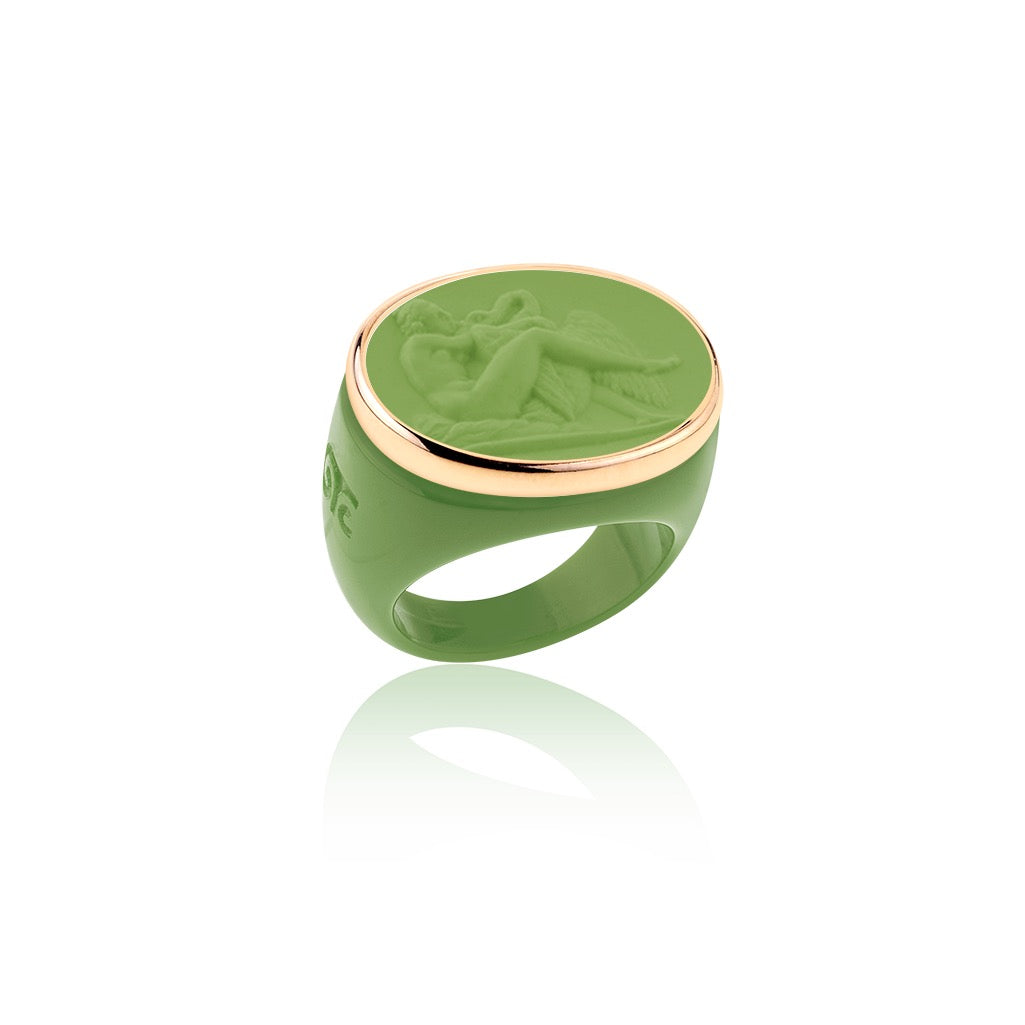
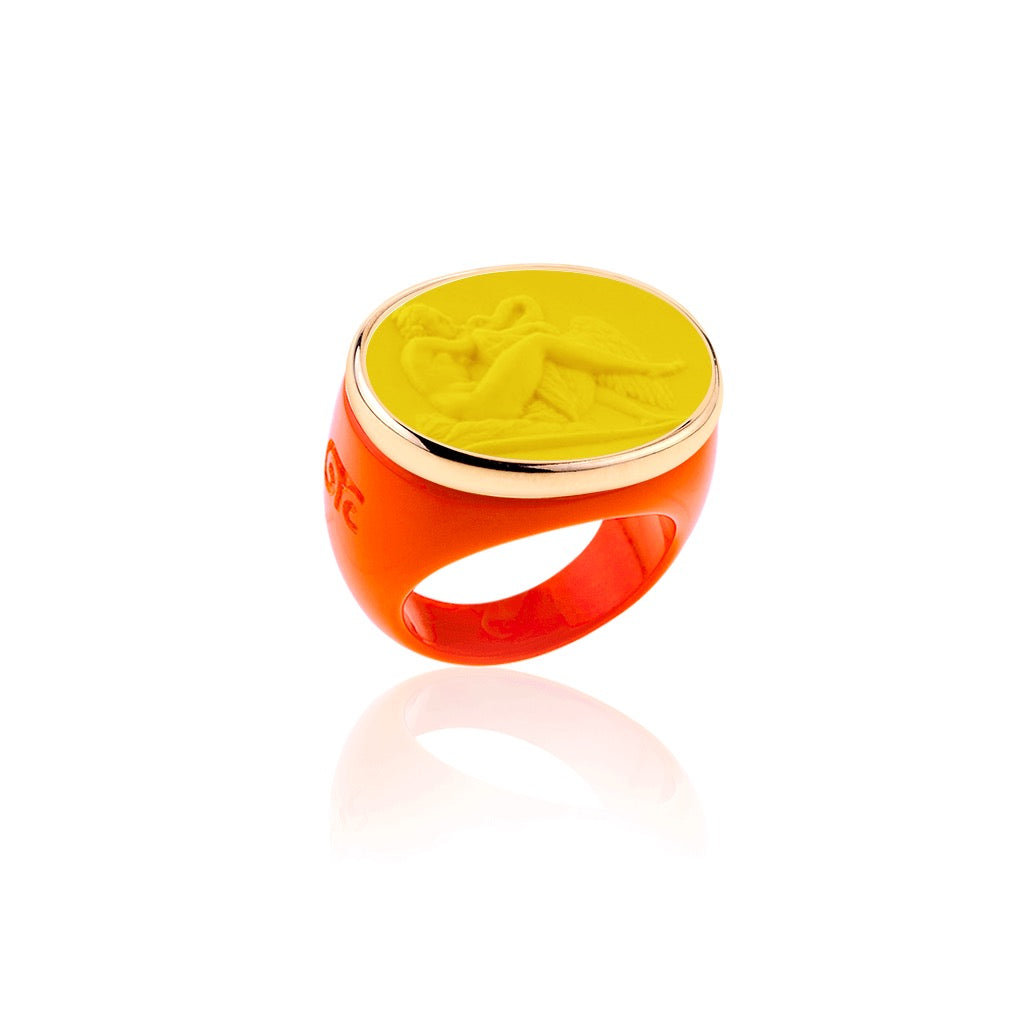
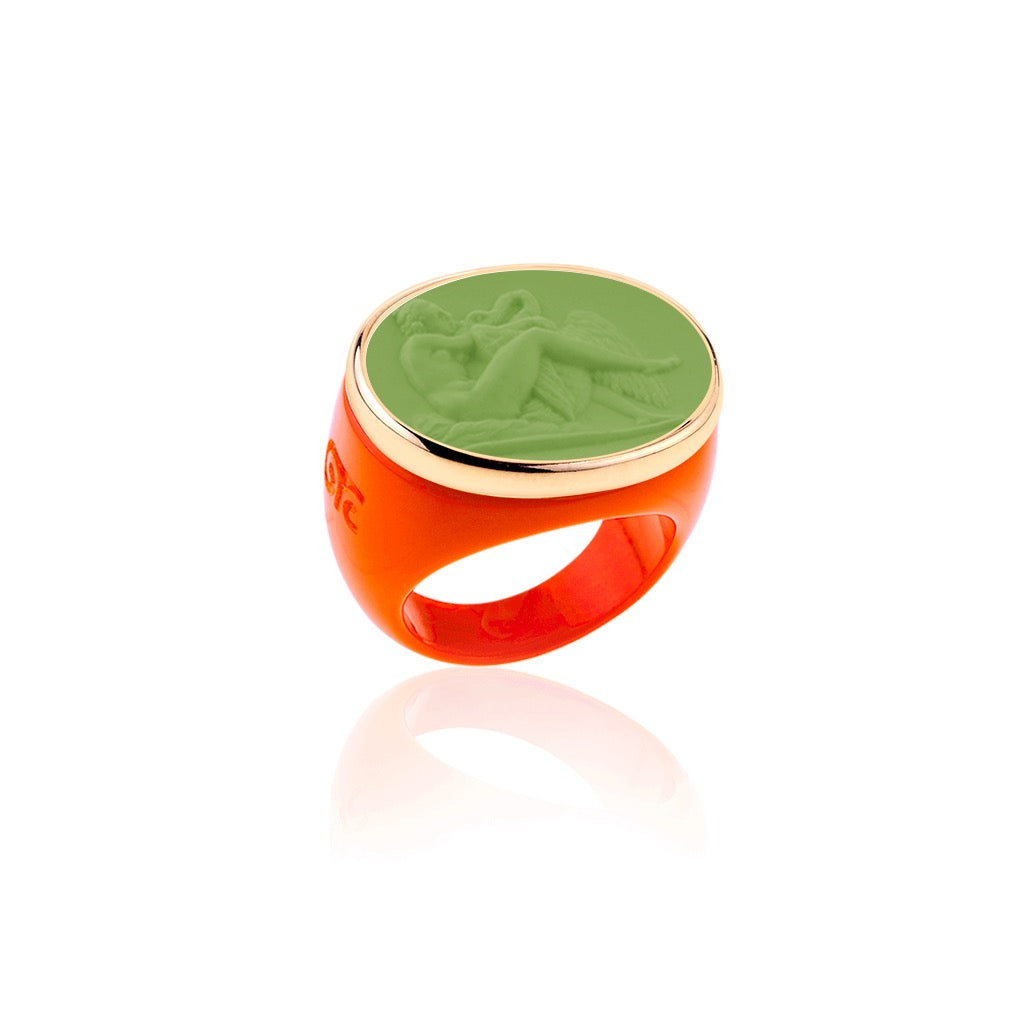
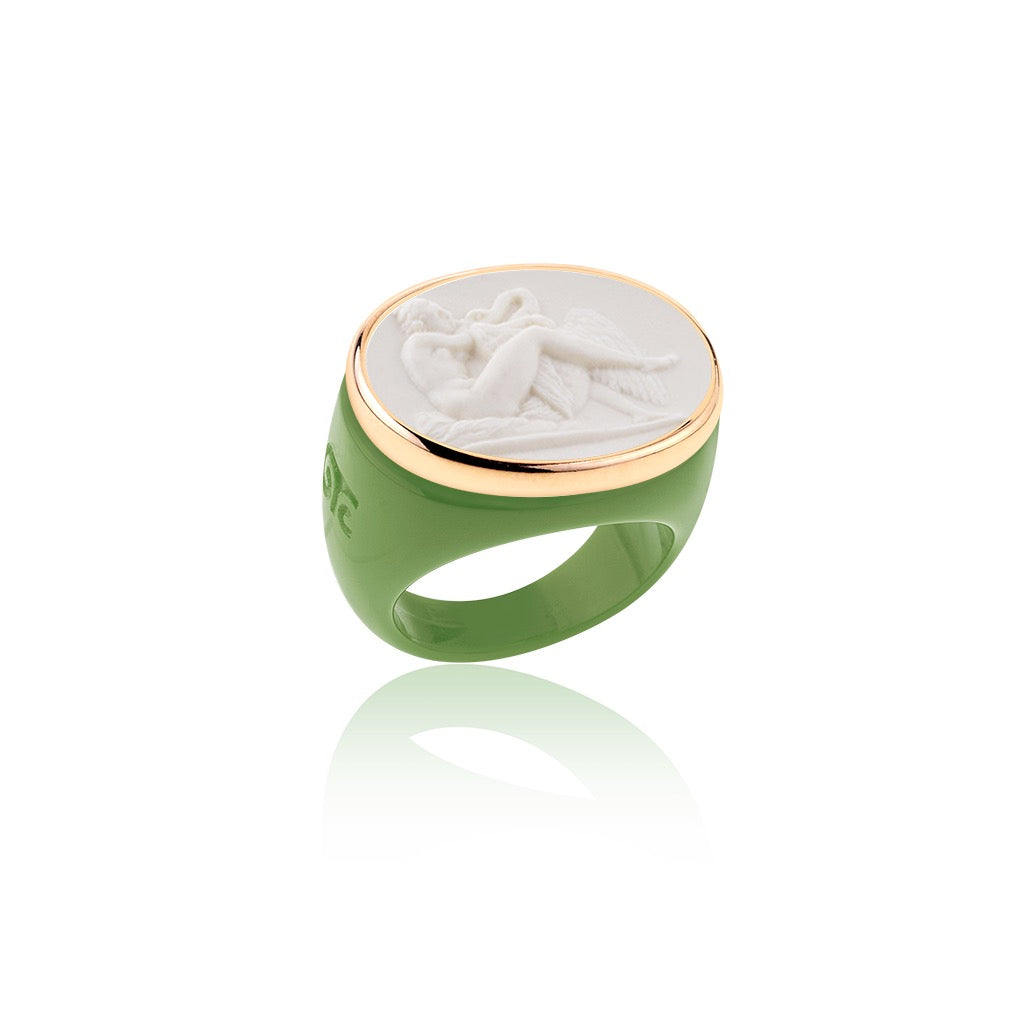
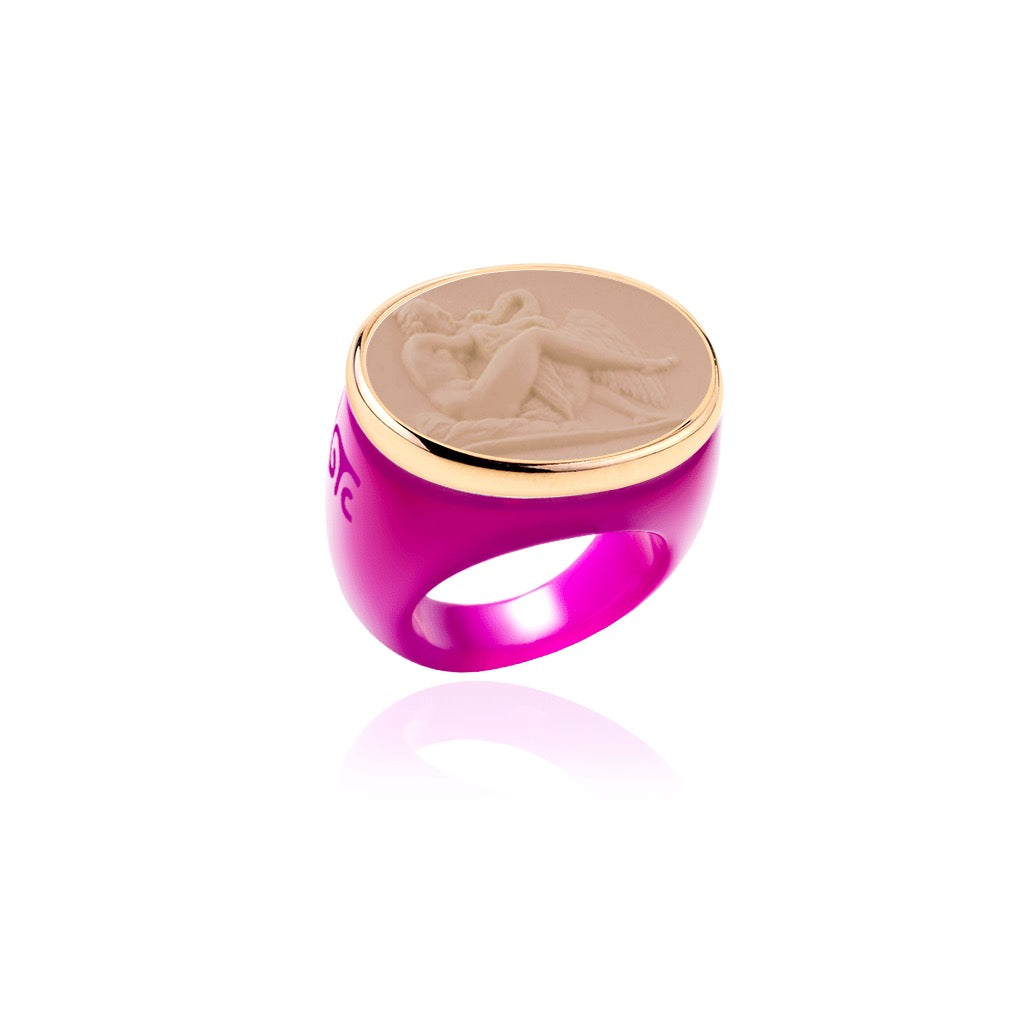
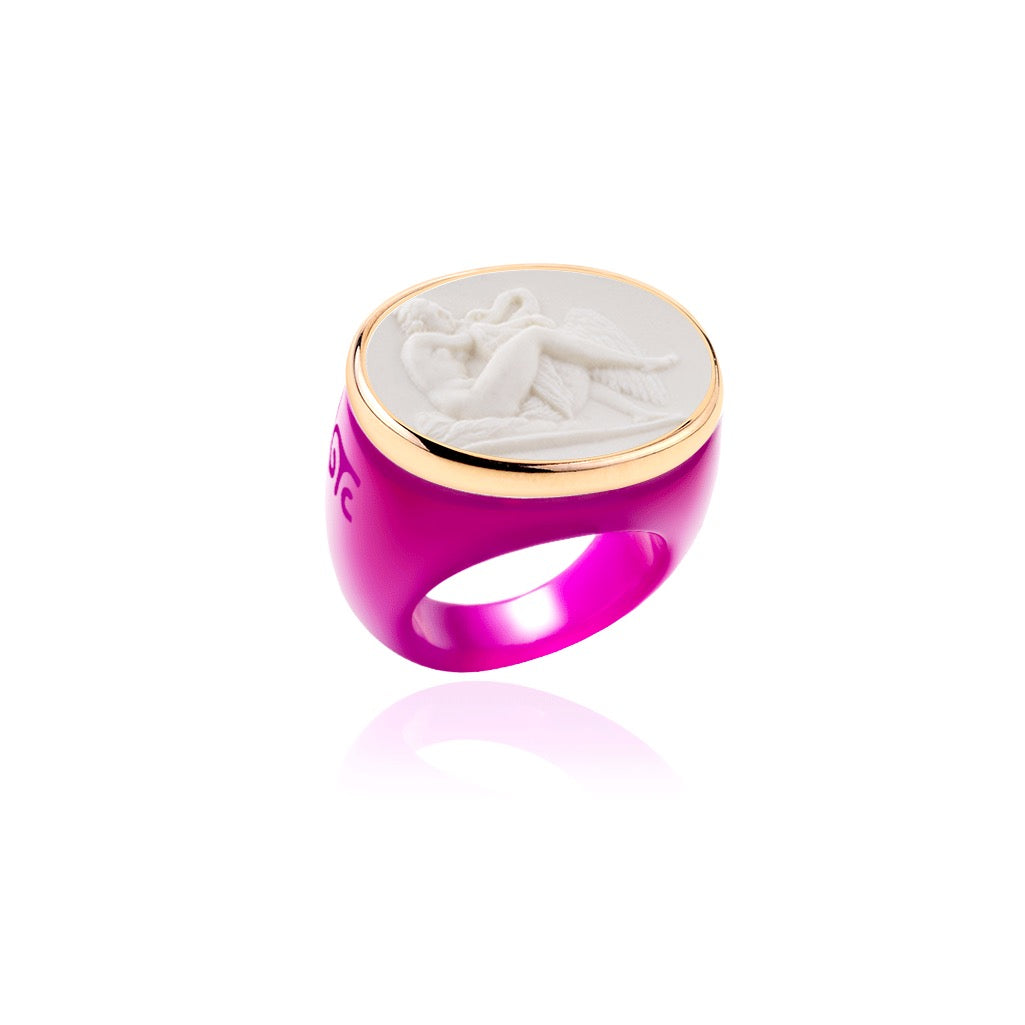
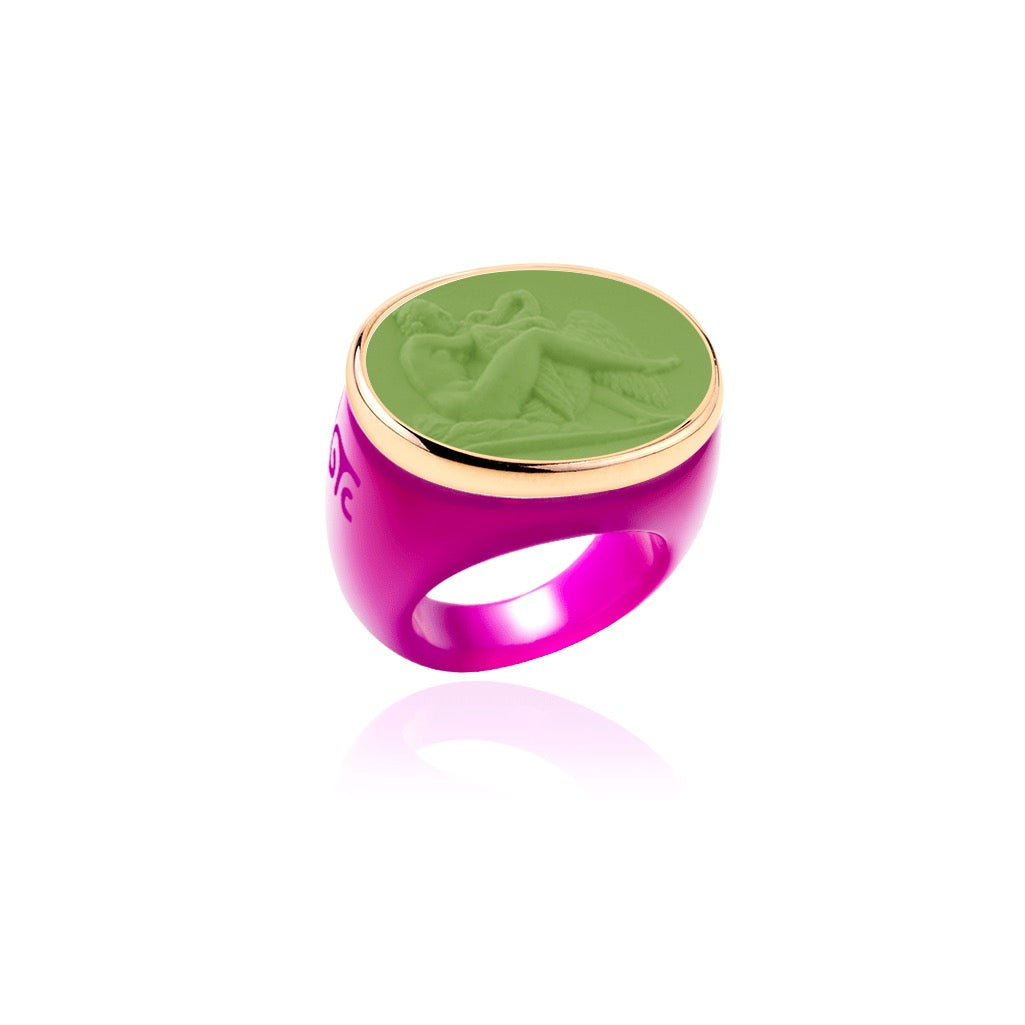
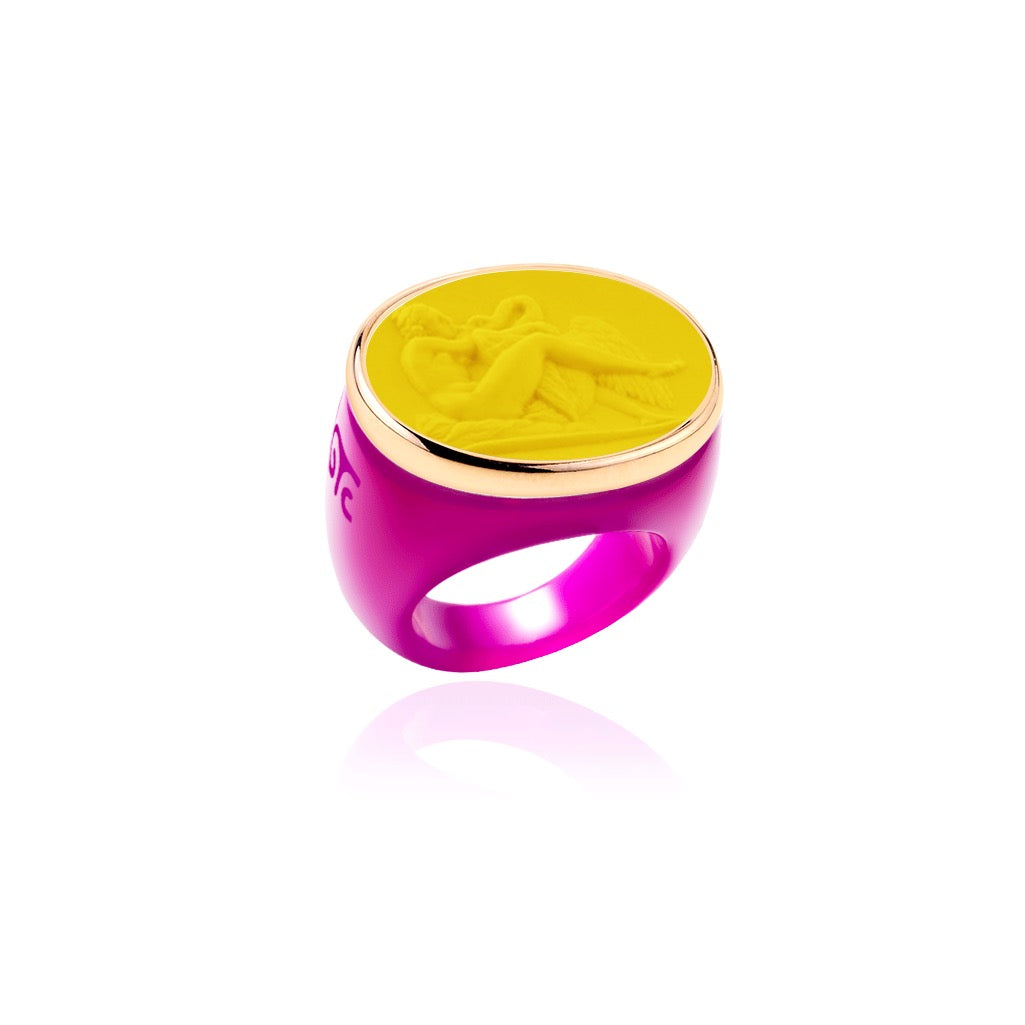
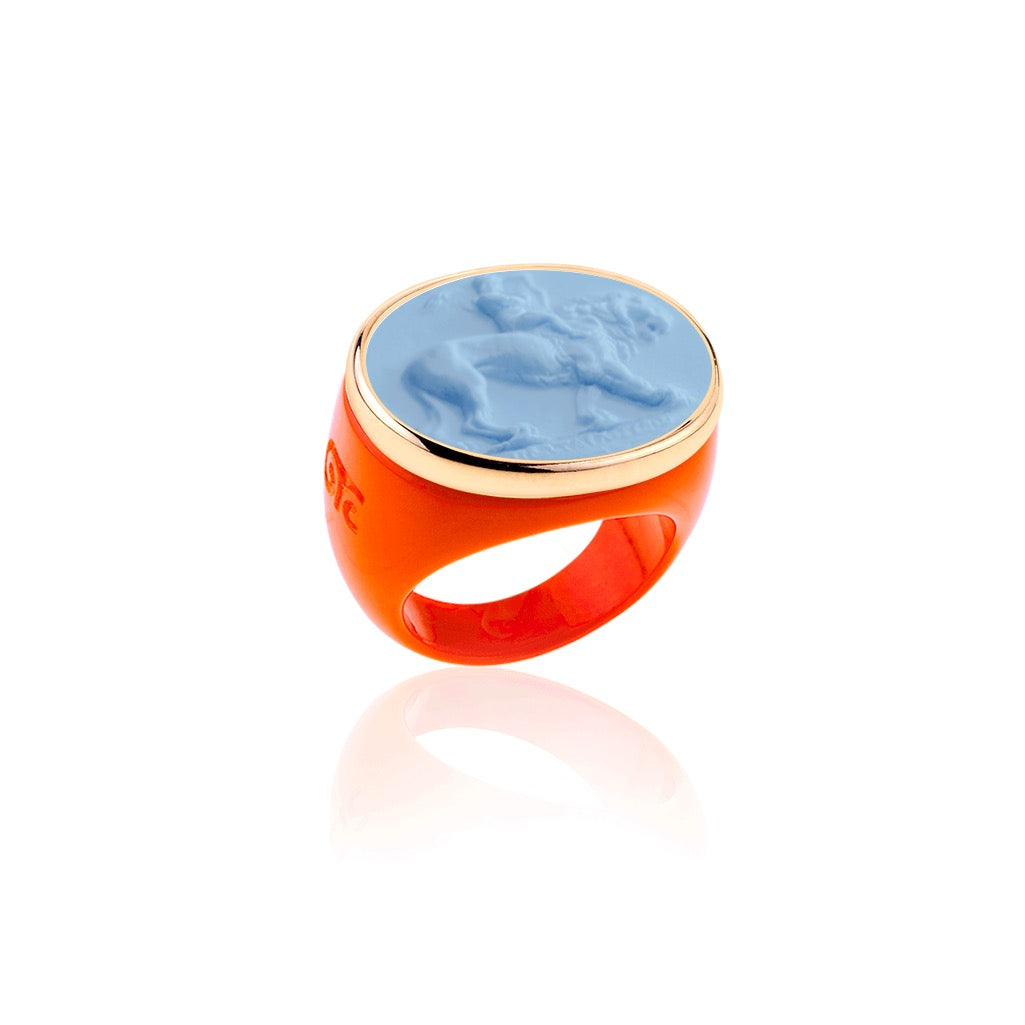
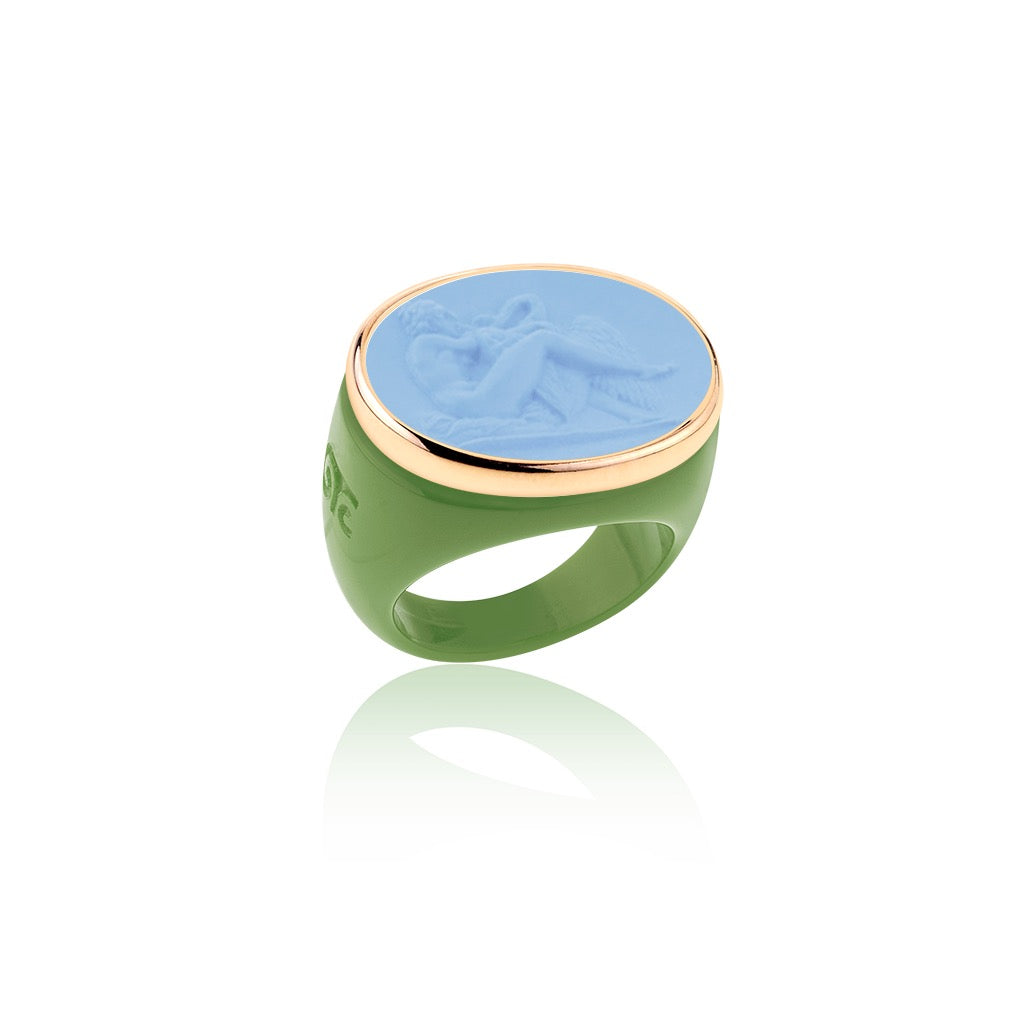


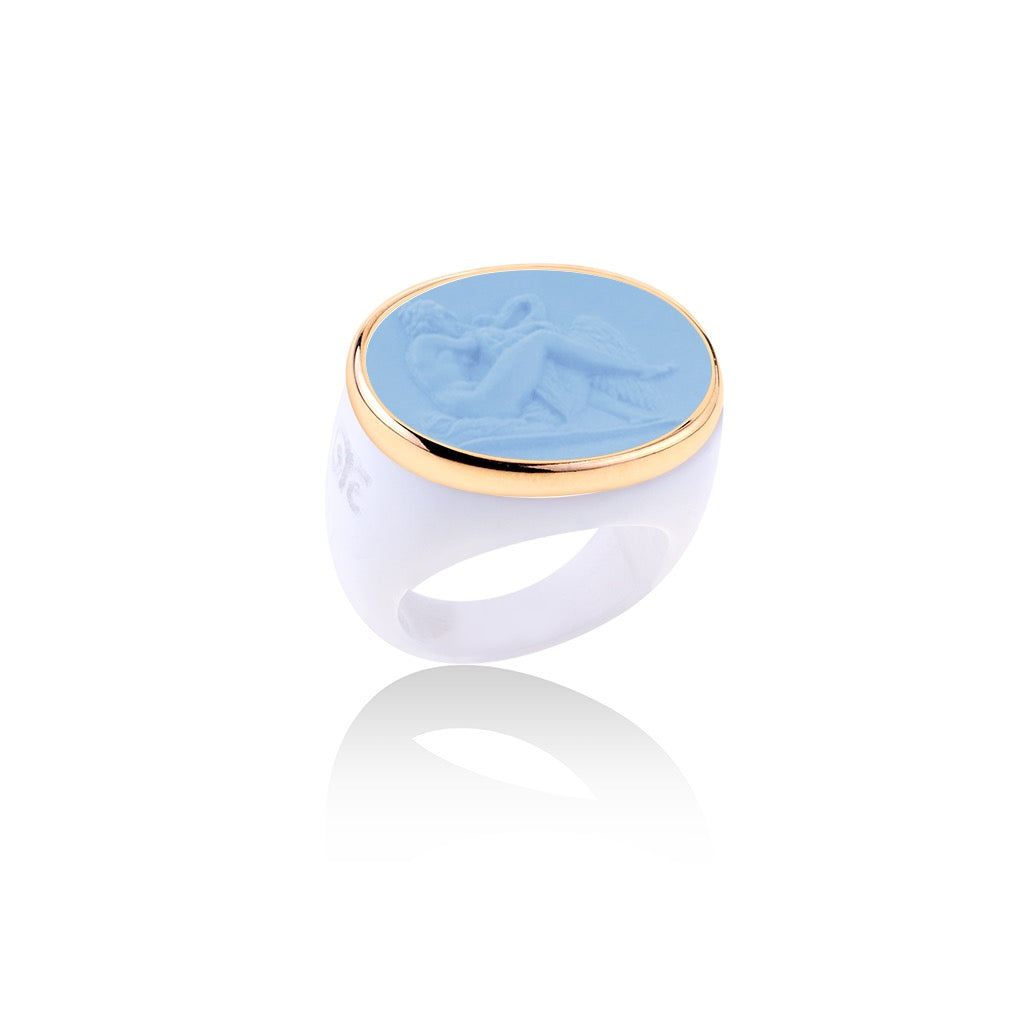
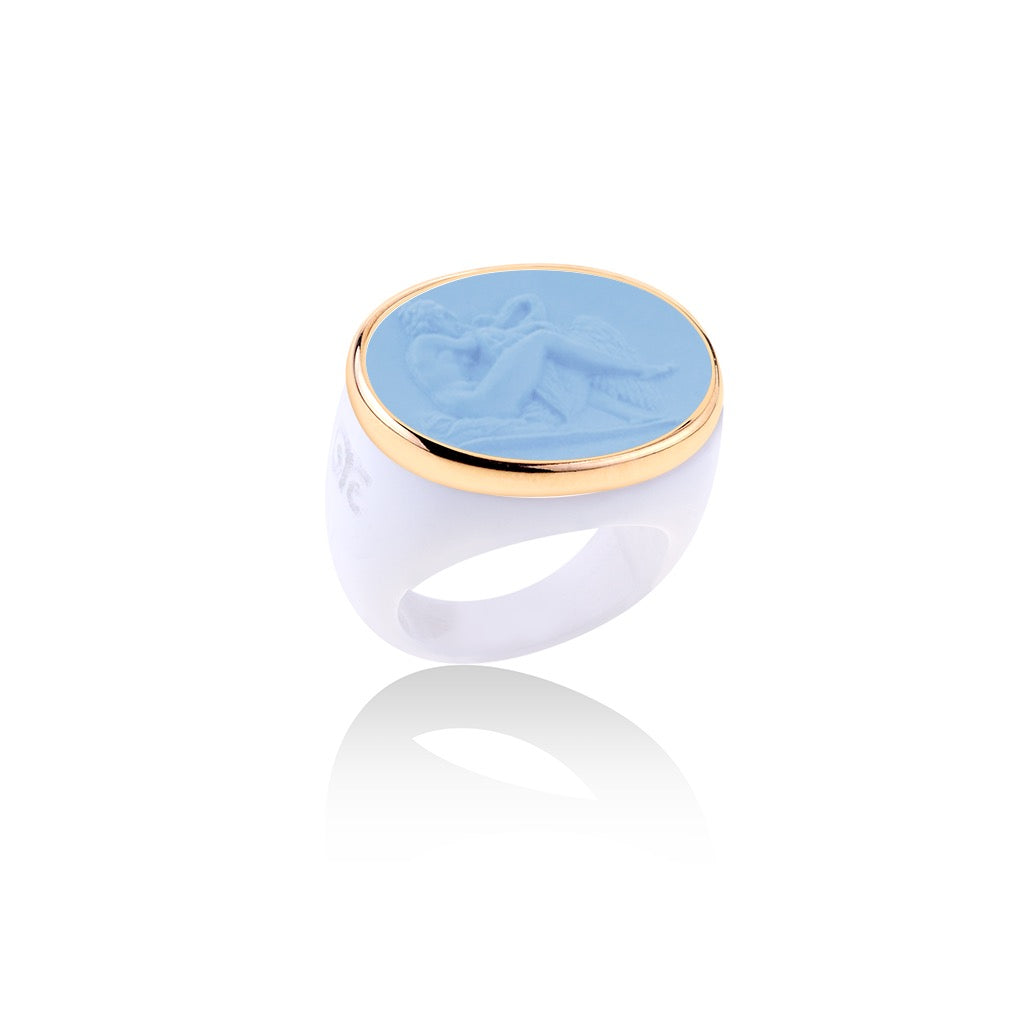
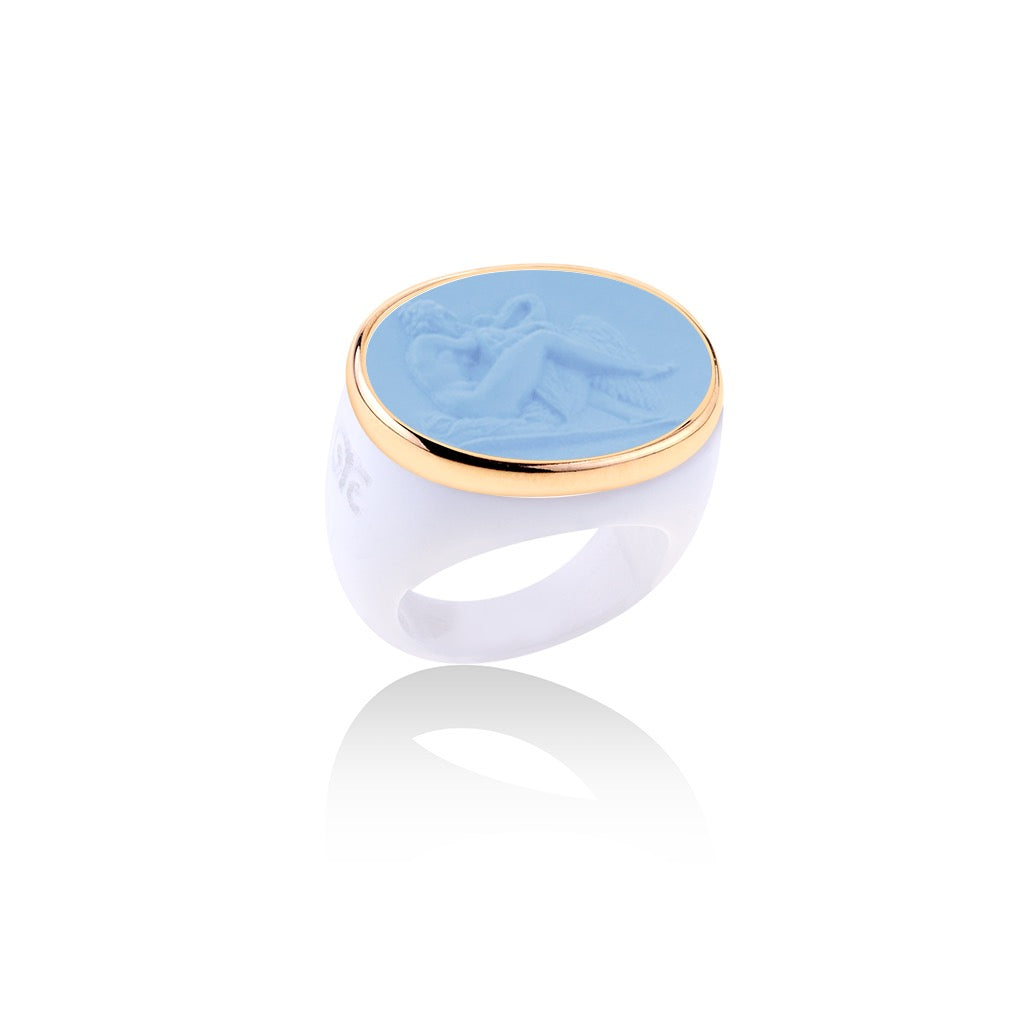

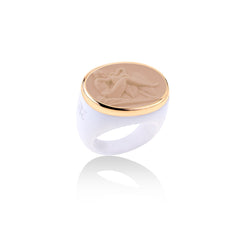
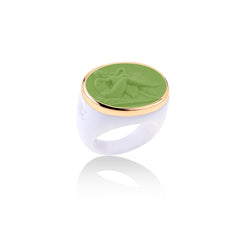
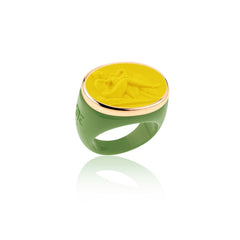
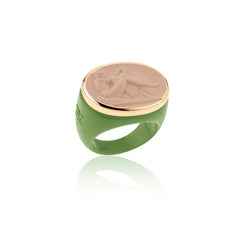
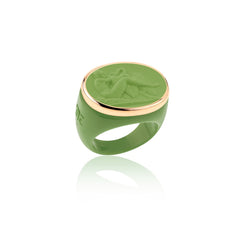
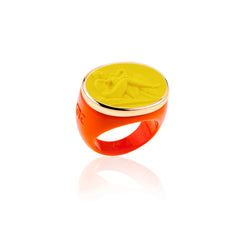
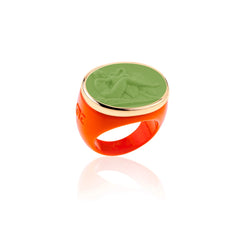
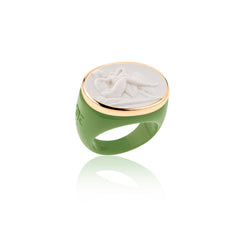
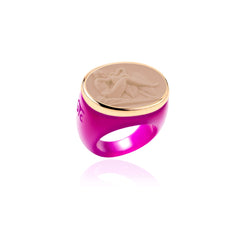
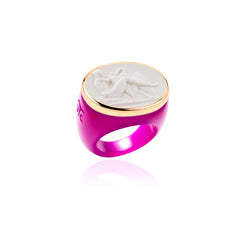
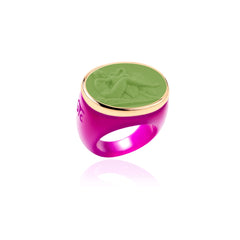
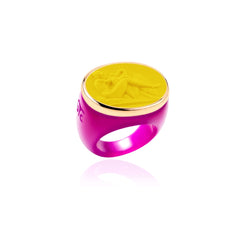
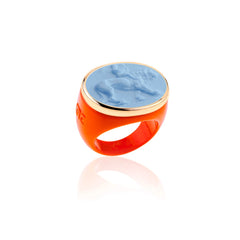
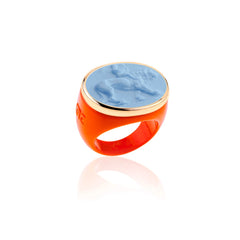
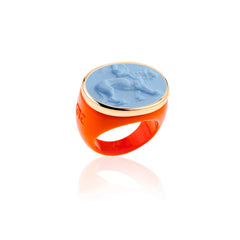
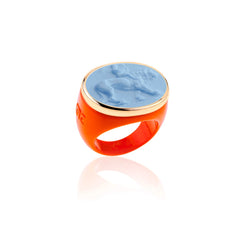
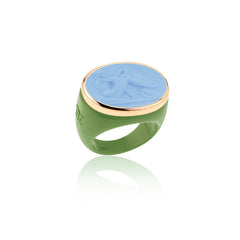
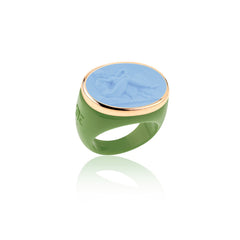


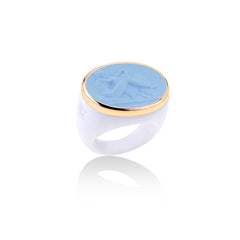
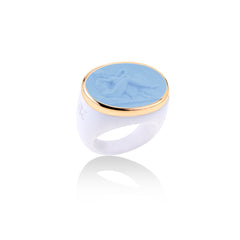
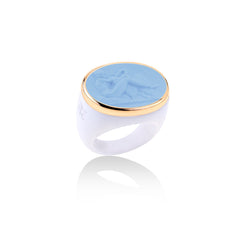
Leda and the Swan, a story told by the greatest artists and artisans of every era, from ancient Greece to Twombly, from Leonardo to Rubens. We had this carving right in front of us, and there was something we couldn’t quite grasp yet, but we knew we wanted, at all costs, to breathe new life into it. And so we accepted the challenge it was unwittingly setting before us. We wanted to ignite this beauty and these lines with the materials we had in mind — plexiglass, these incredible colour compounds, impossibly light and resilient, bronze and the goldsmith’s art behind the working of this marvellous material, the cameo’s own blend with polychromies we develop without pause. We wanted this object to speak once again through its very essence, and for everyone to perceive and see what we could see. You know how it is? It’s like when you look at something that draws you in and you don’t know why. As if you recognised something of your own in it, something you can’t yet define. And then we placed it in the shop window. And from there, our Grand Tour began.
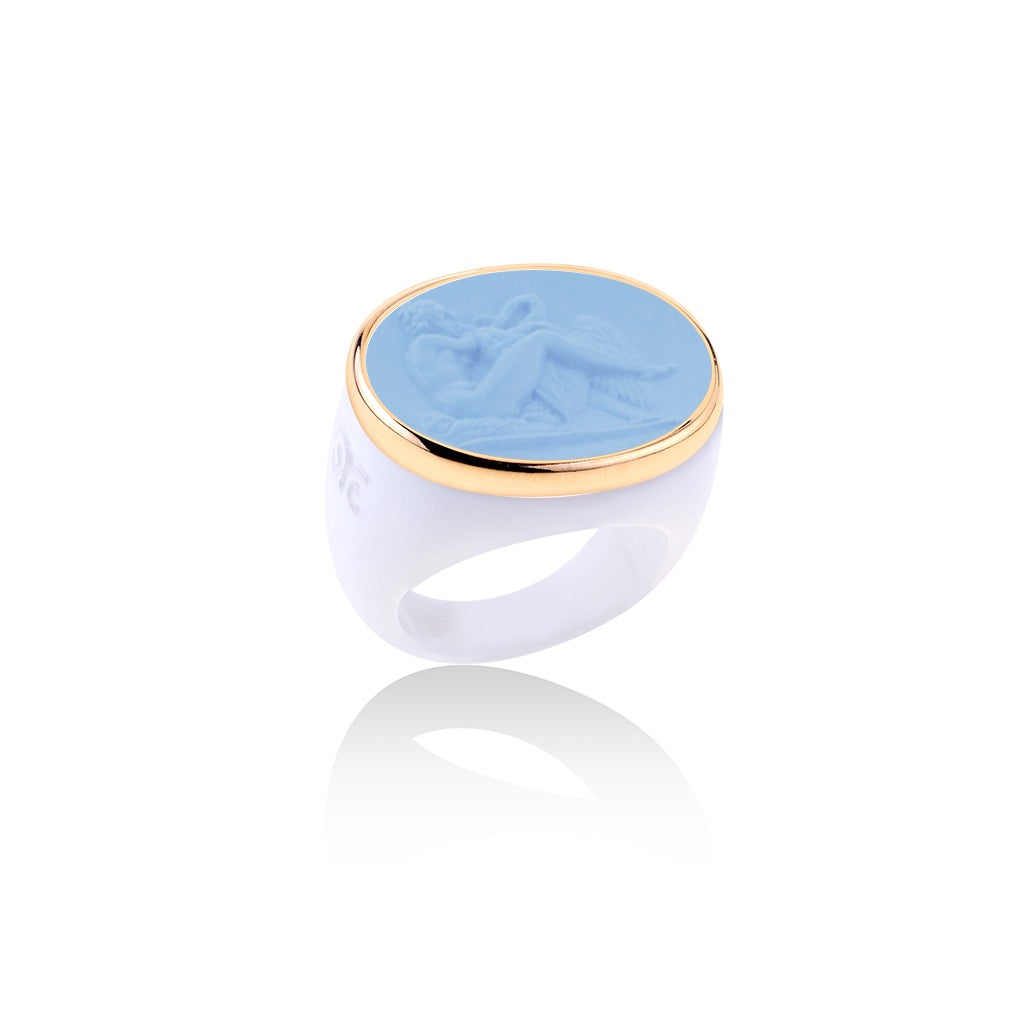
The lines coil and seek each other — Leda's body, the swan's neck, the open wings crossing the full oval. This is an engraving in motion: every curve leads to the next, every ridge tells a story. Jupiter transforms into a swan to draw close to Leda — he chooses a form that enchants, and the metamorphosis is all here: the divine changing shape for love. From this encounter, stories are born that span millennia, yet the scene carved into the cameo captures one precise instant — the moment everything happens, and time stands still in the gesture.
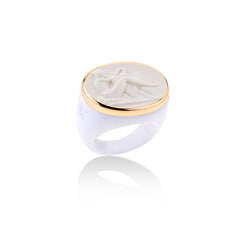
The smooth, luminous plexiglass amplifies every curve of this engraving, the polished surface of the Classic model so clean that the reliefs emerge with rare clarity — the swan’s plumage, the line of the body, the outstretched limbs find in the contrast between sleek material and sculpture a resonance you can see and feel. The oval form of the ring welcomes the composition naturally, the generous volume of the base gives the scene a full presence on the finger, and the gold-plated bronze crown marks the boundary between colour and relief with a light that illuminates the whole story.
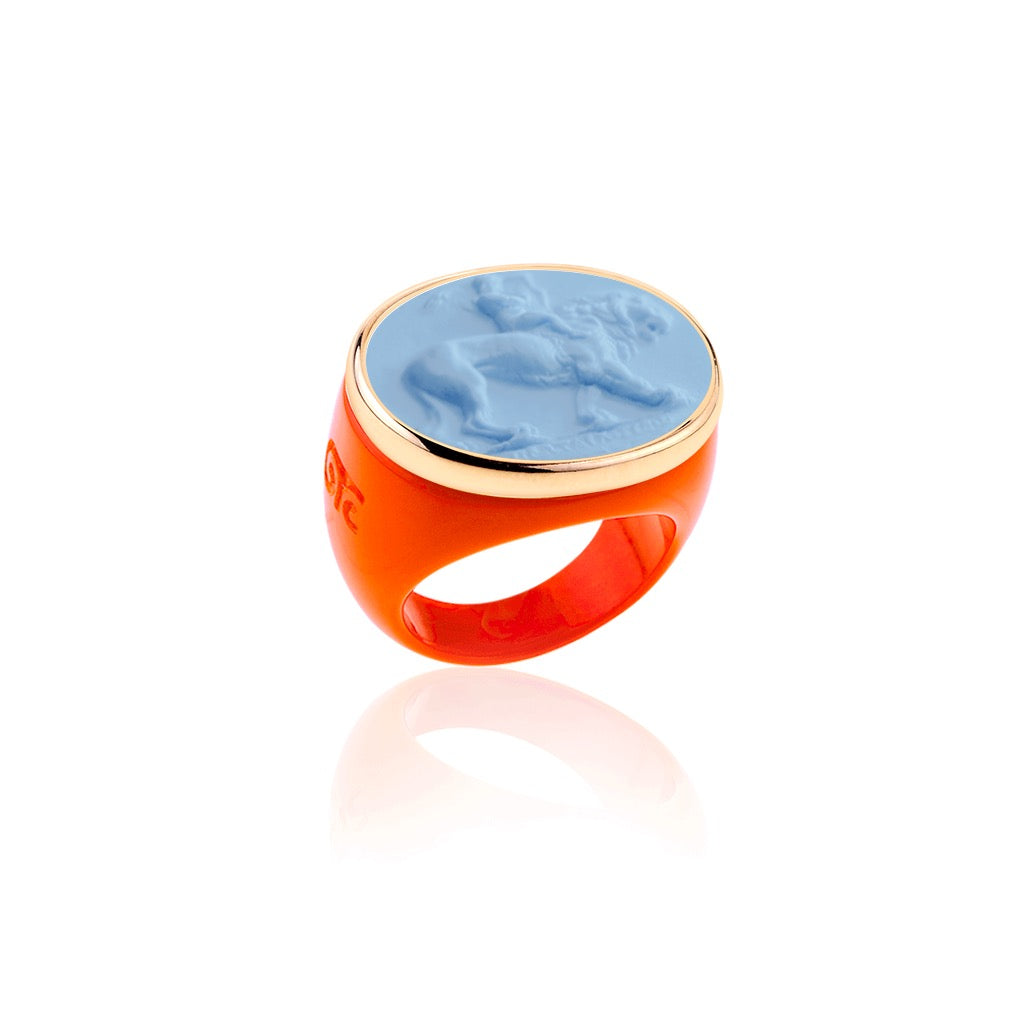
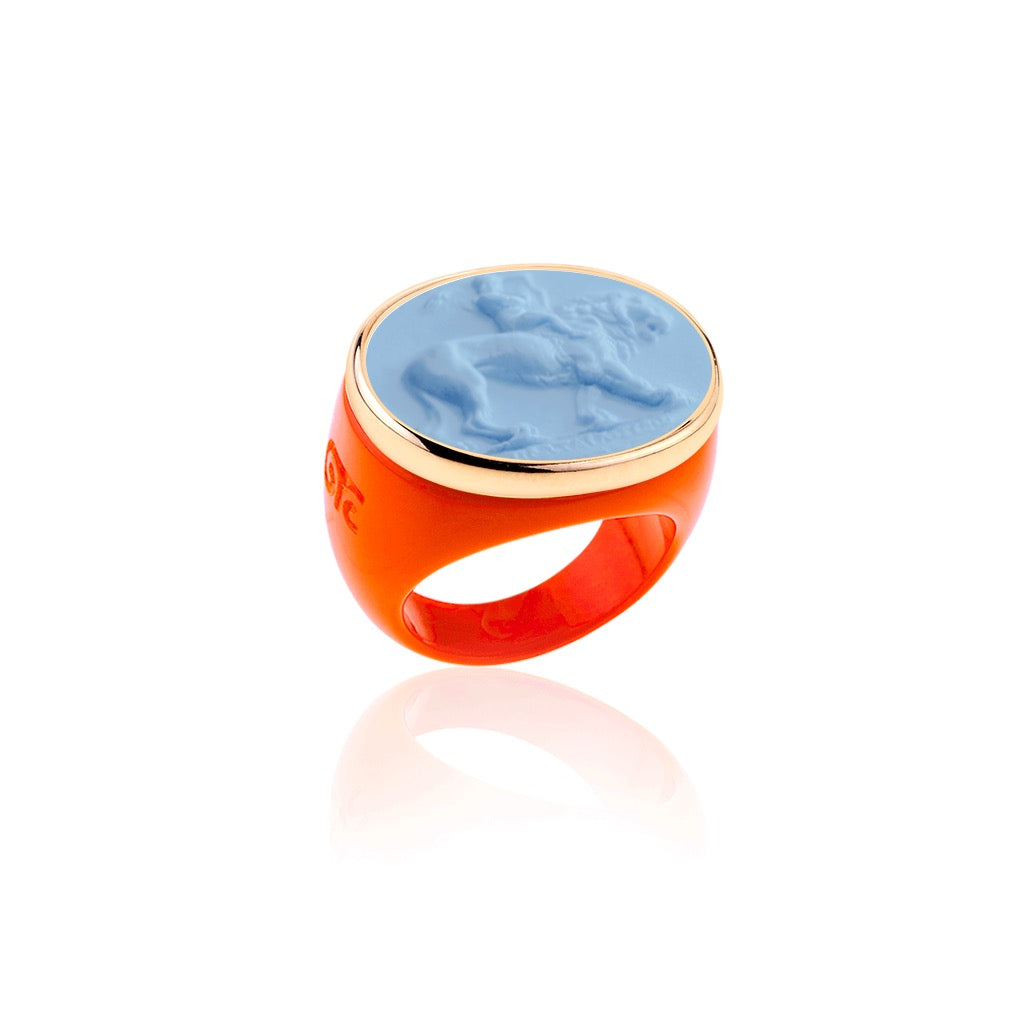
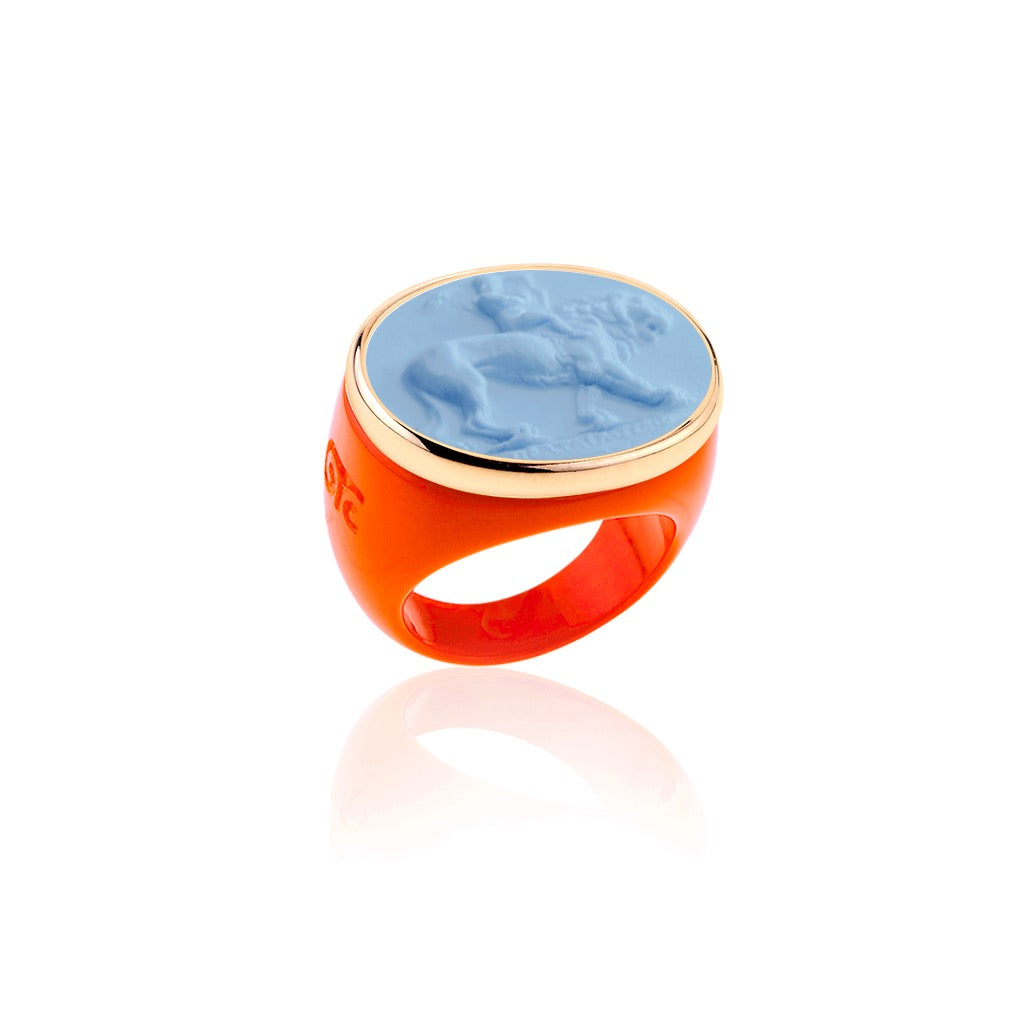
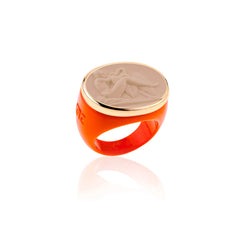
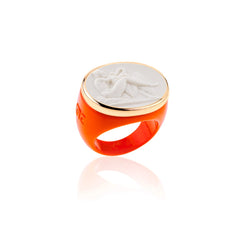
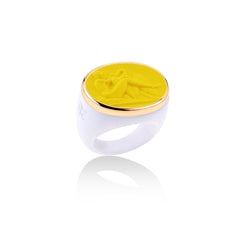
Yellow is the most vivid cameo, sand the gentlest, white the most pristine, pale green the freshest. On the white base every colour is purified — the relief becomes sculpture, light is full and the story opens. On the orange base everything ignites: colours intensify, contrast vibrates, and the scene of Leda and the Swan gains an energy you feel on the finger. On the green base every combination returns to the earth — tones take root, soften, and when pale green meets green the metamorphosis lives in the colour itself.
Important Notes
The jewels' colors in the photo may look different from the original one. This depends from the resolution. Each object is handmade and has unique characteristics.Size chart

SIZE GUIDE
Find your size
Simple steps to measure the correct size of your finger:
- Measure your finger at the end of the day;
- Do not measure your finger when it is either too hot or too cold;
- Don’t forget that our hands are not identical, and that a ring that might fit on a finger on our left hand might not fit on the same finger on our right hand;
- Please be sure to check that your selected size slides along the full length of your finger.
To measure the circumference of your finger, you can use a taylor’s tape measure, or take a look at our video demonstration for another technique (which will require a ring that fits on your selected finger.) This size corresponds to the circumference, which you must use to find your corresponding appropriate size. (S - M - L - XL)
| Size | Italy | USA | France | Diameter (mm) | Circumference (mm) |
|---|---|---|---|---|---|
| S | 12 > 13 | 6 > 6,5 | 52 > 53 | 16,5 > 16,9 | 52 > 53 |
| M | 14 > 15 | 7 > 7 1/4 | 54 > 55 | 17,2 > 17,4 | 54 > 55 |
| L | 16 > 17 | 7,5 > 8 | 56 > 57 | 17,8 > 18,1 | 56 > 57 |
| XL | 18 > 19 | 8, 5 > 9 | 58 > 59 | 18,5 > 18,8 | 58 > 59 |
| 2XL | 20 | 9 | 60 | 19,1 | 60 |
| 3XL | 22 | 10 | 62 | 19,7 | 62 |
| 4XL | 24 | 10 3/4 | 64 | 20,4 | 64 |
| 5XL | 26 | 11 3/4 | 66 | 21 | 66 |
Leda and the swan
Let destiny meet your choice.
Leda was the daughter of Thestius and the wife of Tyndareus. She has been known as the Queen of Sparta. Leda was seduced by Zeus when he came to her in the form of a swan. Leda gave birth to an egg. From it hatched the Dioscuri, the twins Castor and Pollux. With Zeus she also had Helen and with Tyndareus she had Clytemnestra. Jupiter is the supreme god of the Roman pantheon, called dies pater, “shining father”. He is a god of light and sky, and protector of the state and its laws. He is a son ofSaturn and brother of Neptune and Juno (who is also his wife). The Romans worshipped him especially as Jupiter Optimus Maximus (all-good, all-powerful). This name refers not only to his rulership over the universe, but also to his function as the god of the state who distributes laws, controls the realm and makes his will known through oracles. His English name is Jove. He had a temple on the Capitol, together with Juno and Minerva, but he was the most prominent of this Capitoline Triad. His temple was not only the most important sanctuary in Rome; it was also the center of political life. Here of official offerings were made, treaties were signed and wars were declared, and the triumphant generals of the Roman army came here to give their thanks. Other titles of Jupiter include: Caelestis (heavenly), Lucetius (of the light), Totans (thunderer), Fulgurator (of the lightning). As Jupiter Victor he led the Roman army to victory. Jupiter is also the protector of the ancient league of Latin cities. His attribute is the lightning bolt and the eagle is both his symbol and his messenger. Jupiter is completely identical with the Greek Zeus. Michelangelo (1530) London-National Gallery Leonardo (1510-1515) Roma-Galleria Borghese Robert Cockle Lucas (1800-1883) Berlin National Gallery
Show all products- Choosing a selection results in a full page refresh.