
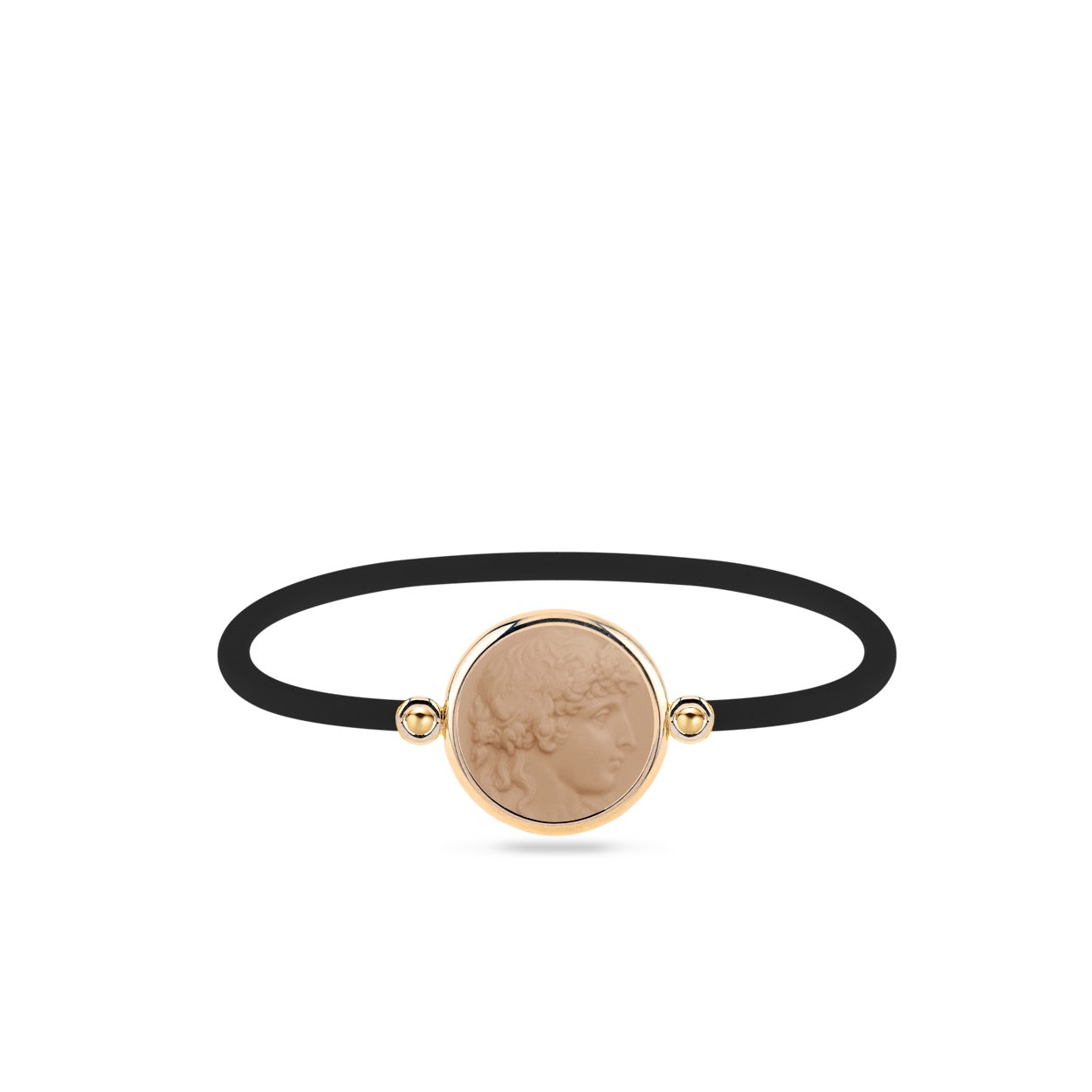
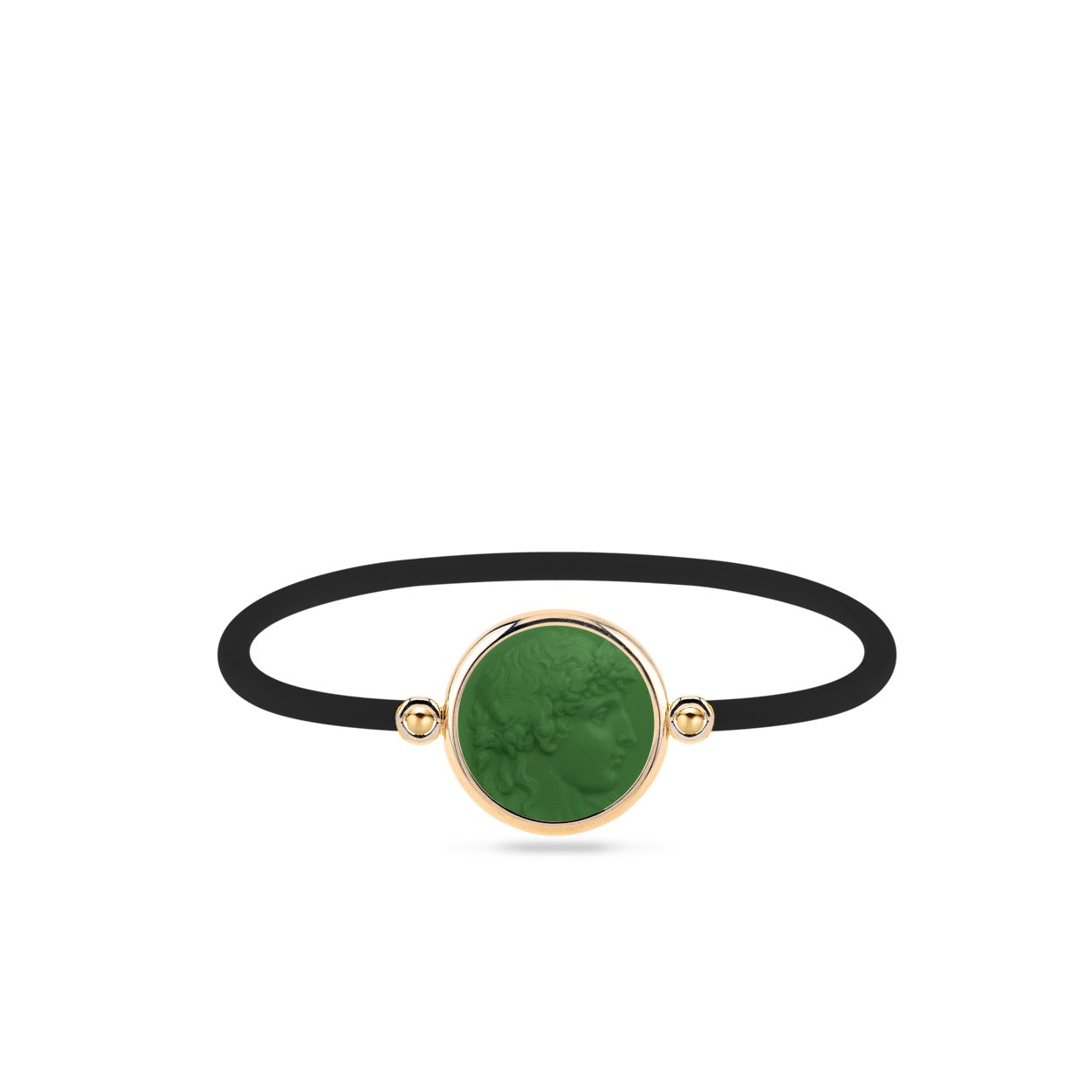
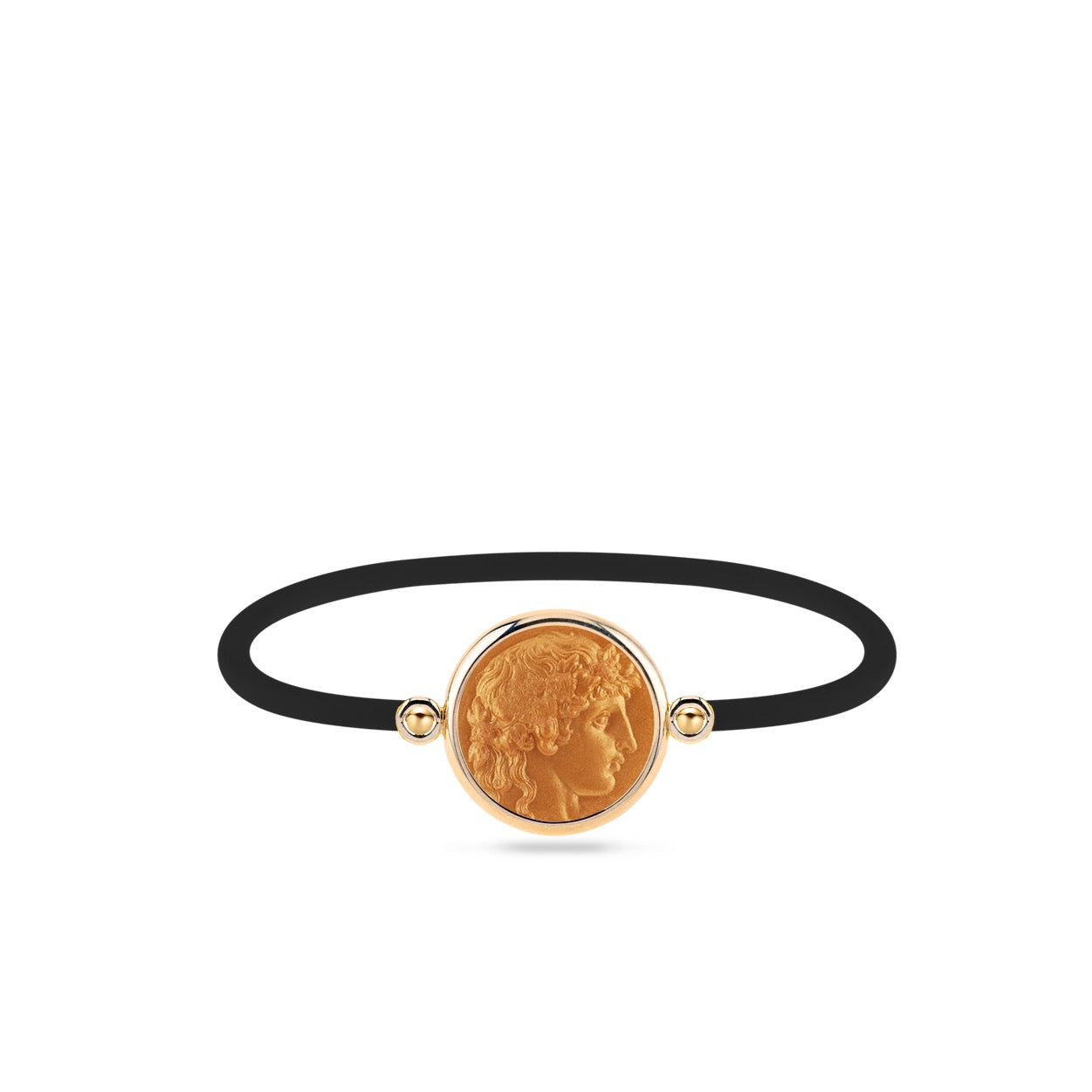
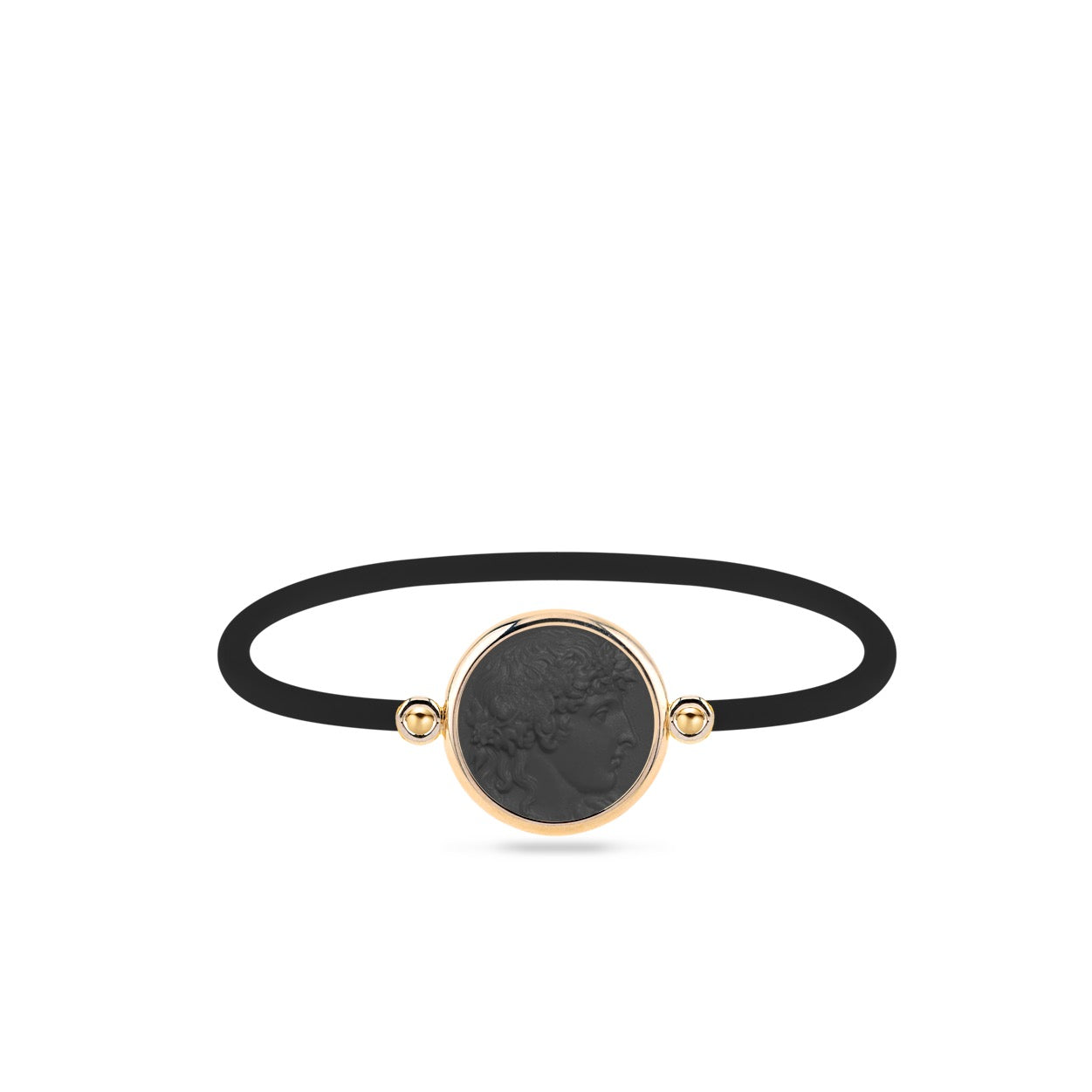
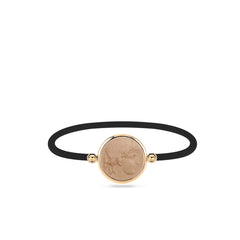
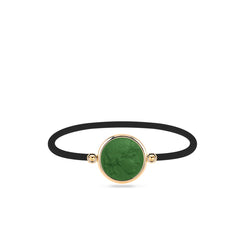
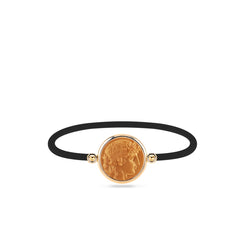
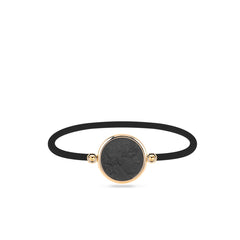
A loop of silicone embraces the gilded bezel and Antinous is there, in relief: the high brow, the nose, the curve of the cheek. A small, dense engraving that has held that face for two thousand years. The elastic band slips on in a second, settles at the wrist, disappears — only he remains. Choosing the colour of the silicone is an intimate gesture. Like choosing something to put on in the morning — a tender, personal thing that shifts the mood of the piece. Antinous is something you carry every day because every day you can change him. The loop swaps with your fingers. As presented, the silicone is black — the most sought-after base, the one that frames the bezel with the greatest clarity. Antinous black on black is all depth: the relief lives in shadow, read through tonal contrast. Antinous gold ignites — the warm motif resonating with the gilded bronze. Antinous sand has the colour of travertine, a full and earthy light. Antinous green is the most unexpected version: fresh, direct, the classical profile in a surprising key. To these four versions of the motif you add all the colours of the band — each combination builds something new. The possibilities are endless and Antinous renews himself. — — —
Important Notes
The jewels' colors in the photo may look different from the original one. This depends from the resolution. Each object is handmade and has unique characteristics.Size chart

SIZE GUIDE
Find your size
Simple steps to measure the correct size of your wrist:
To measure the circumference of your wrist, you can use the paper sizer, or you can use a taylor’s measuring tape. This length corresponds to the circumference of your wrist, which you must have to find your corresponding appropriate size. (S - M - L - XL)
| Size | Cm | Inch | Extension |
|---|---|---|---|
| S | 1617 | 6,306,69 | 3 cm - 1,20 inch3 cm - 1,20 inch |
| M | 1819 | 7,097,48 | 3 cm - 1,20 inch3 cm - 1,20 inch |
| L | 2021 | 7,878,27 | 3 cm - 1,20 inch3 cm - 1,20 inch |
| XL | 22 | 8,66 | 3 cm - 1,20 inch |
Antinous
Love remembered is never lost.
Antinous (also Antinoo or Antinoös; 27 November, c. 111 – before 30 October 130) was a Bithynian Greek youth and a favourite, or lover, of the Roman emperor Hadrian. He was deified after his death, being worshiped in both the Greek East and Latin West, sometimes as a god (theos) and sometimes merely as a deified mortal (heros). Antinous became associated with homosexuality in Western culture, appearing in the work of Oscar Wilde and the Portuguese poet Fernando Pessoa.
Show all products- Choosing a selection results in a full page refresh.